
Polypropylene plate is the go-to engineering plastic for industrial fabrication. It fills a clear gap in material selection: thicker than PP sheet, lighter than HDPE, and fully machinable and weldable. This guide covers thickness grades, key grades, core properties, and industrial applications. It also gives you a direct comparison of PP plate vs HDPE plate vs PP sheet so you can choose the right material quickly.

What Is a Polypropylene Plate? Plate vs Sheet
A polypropylene plate is a rigid PP panel ≥10 mm thick. Homopolymer grades (PPH) offer high stiffness, easy CNC machining, and reliable hot-gas welding – making them the first choice for chemical tanks, structural components, and corrosion-resistant equipment.
The term “plate” refers to panels ≥10 mm thick. These panels are stiff, machinable, and weldable. “Sheet” covers thinner gauges (1-6 mm) used for lining, thermoforming, or printing.
Two main polymer grades apply to thick plate:
- PPH (homopolymer) – highest stiffness and heat resistance; the standard choice for structural and chemical-duty parts.
- PP-C (copolymer) – better impact resistance at lower temperatures.
Note: this article covers industrial thick plate only – not consumer dinner plates or laboratory 96-well plates.
Specifications & Thickness Grades
Standard thickness runs from 10 mm to 30 mm, with custom orders reaching 50 mm+. Common sheet sizes are 1220 × 2440 mm and 1500 × 3000 mm.
| Grade | Key Feature |
|---|---|
| PPH (homopolymer) | Max stiffness, main structural grade |
| PP-C (copolymer) | Better impact, cold-weather use |
| PPAB (anti-block) | Prevents sticking in stacked storage |
| FR PP | UL-94 rated for fire-code projects |
| GF-PP (glass-filled) | Higher modulus for load-bearing parts |
Density is 0.90-0.92 g/cm³, making PP one of the lightest structural plastics. Natural (off-white) and grey are the most common colours; custom colours are available on request.
Key Properties & Performance
PP plate handles a wide range of demanding environments:
- Chemical resistance – stable against acids, alkalis, and salt solutions; ideal for tank liners and chemical-processing equipment.
- Temperature range – continuous service from −10 °C to 100 °C.
- Machinability – CNC milling, drilling, and tapping all work well.
- Weldability – hot-gas and extrusion welding produce strong, leak-free joints.
- Light weight and electrical insulation – food-contact grades are also available for washdown environments.
PP Plate vs HDPE Plate vs PP Sheet
| Property | PP Plate | HDPE Plate | PP Sheet |
|---|---|---|---|
| Typical thickness | 10-100 mm | 10-100 mm | 1-6 mm |
| Density (g/cm³) | 0.90-0.92 | 0.94-0.96 | 0.90-0.92 |
| Stiffness | High | Medium | Low |
| Continuous temp | −10~100 °C | −50~80 °C | −10~100 °C |
| Chemical resistance | Excellent | Excellent | Excellent |
| Machinability | Excellent | Excellent | Fair |
| Weldability | Excellent | Excellent | Yes |
How to choose:
- Need rigidity, light weight, and high-temperature resistance? Choose polypropylene plate.
- Need stronger acid resistance, very low-temperature toughness, or FDA food contact? Choose HDPE plate.
- Need lining, thermoforming, or printing? Choose PP sheet.
Where fire codes apply, flame retardant PP board adds a UL-94 rated option.
Industrial Applications
PP plate is used across multiple industries:
- Chemical and corrosion-resistant equipment – acid pickling tanks, tower internals, electroplating baths.
- Water treatment and storage – water tanks, dosing vessels, and tank liners.
- Machined mechanical parts – spacers, guide rails, fixtures, and baffles.
- Welded assemblies – enclosures, protective covers, and ductwork.
- Cleanroom and lab surfaces – worktops, insulating panels, and sample trays.
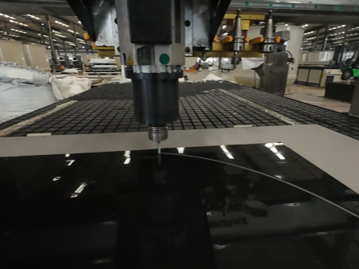
The base material for all these uses is our polypropylene sheet range, produced in plate gauges. For maximum rigidity in thick sections, PPH homopolymer sheet is the preferred grade. When plates are stacked during storage, anti-block PP sheet prevents surface sticking. Browse the full PP sheet series for all plate and board options.
Frequently Asked Questions
1. What is the difference between PP plate and PP sheet?
Plate is ≥10 mm thick, stiff, and designed for machining and welding. Sheet is 1-6 mm, flexible, and suited for lining or thermoforming.
2. How thick can polypropylene plate be made?
Standard stock reaches 30 mm. Custom orders go to 50 mm or more.
3. Is PP plate better than HDPE plate?
It depends on the application. PP plate gives higher stiffness and temperature resistance. HDPE plate handles stronger acids and very low temperatures better.
4. Can polypropylene plate be machined and welded?
Yes. CNC milling, drilling, and tapping all work cleanly. Hot-gas and extrusion welding both produce strong, reliable joints.
5. What is PP plate used for?
Chemical tanks, water treatment vessels, machined components, welded assemblies, and cleanroom work surfaces are the most common uses.