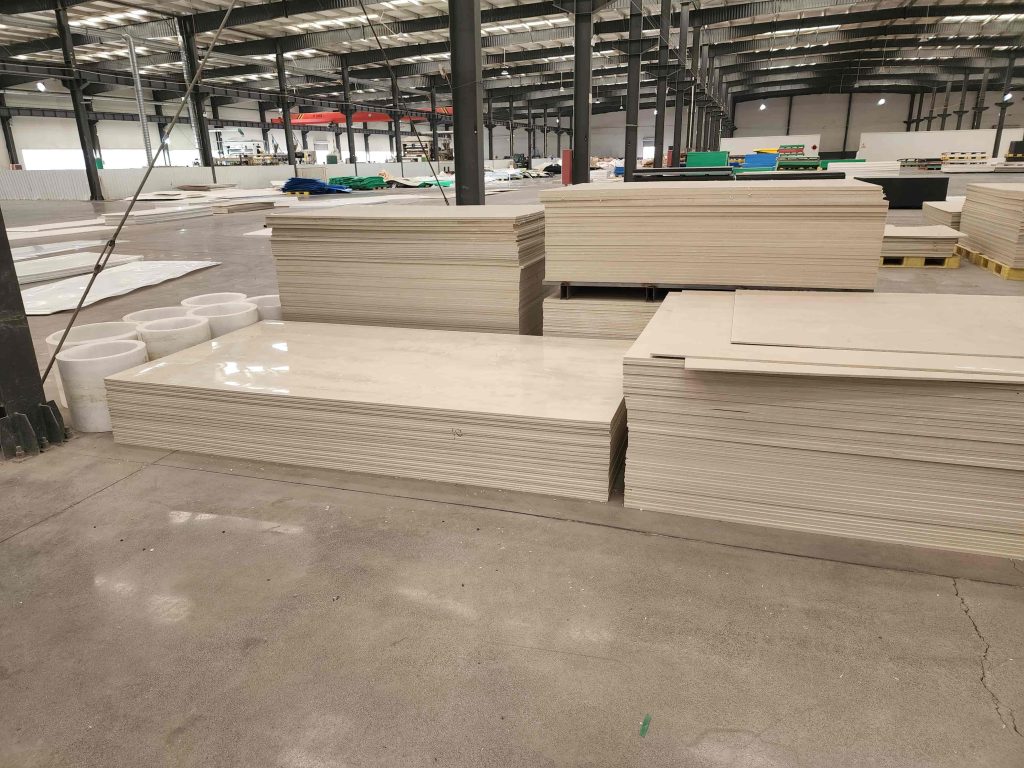
Overview of PPR Sheet
PPR sheet is produced from polypropylene random copolymer, a resin in which ethylene monomers are randomly distributed along the polymer chain. This random structure disrupts the crystallinity of pure polypropylene homopolymer, which lowers the melting point slightly but greatly improves impact toughness, flexibility and long-term resistance to hot water. The trade-off is deliberate and is what makes PPR the standard material for hot-water piping and chemical containment.
Material Chemistry and Why It Matters
Random Copolymer versus Homopolymer
PP homopolymer is stiffer and has a higher melting point, but it becomes brittle at low temperature and is prone to stress cracking under hot water. PPR trades a small amount of stiffness for a large gain in impact strength and thermal ageing resistance. PPH sheet is the better choice for stiff, load-bearing parts at ambient temperature; PPR is the better choice for hot, wet or aggressive service.
Block Copolymer Comparison
Block copolymer PP offers even higher low-temperature impact strength but lower transparency and a different stiffness profile. PPR sits between the two and offers the best overall balance for sheet fabrication and welding.
Key Performance Properties
Hot Water and Thermal Stability
PPR sheet is rated for continuous service up to about 90°C and withstands short-term excursions above that. It does not hydrolyse and does not release plasticisers or heavy metals into the fluid stream, which is why it is accepted for potable water contact in many markets.
Chemical Resistance
PPR resists most acids, alkalis, salt solutions and aqueous salt compounds extremely well. It is unaffected by electroplating baths, pickling liquors and many aggressive industrial chemicals. Resistance to strong oxidising acids and some chlorinated solvents is more limited, and selection should always be checked against the specific media and concentration.
Impact Strength
Compared with standard PP homopolymer, the random copolymer structure gives PPR noticeably better impact resistance, particularly at low ambient temperatures. This reduces the risk of cracking in tank walls, ducting and large welded fabrications that are subject to thermal cycling.
Weldability
PPR is one of the most weldable thermoplastics. Butt welding, hot-gas welding and extrusion welding all produce strong, leak-tight joints with a high weld factor, which makes the material ideal for fabricating large tanks, scrubbers and ductwork from sheet.
Fabrication
PPR sheet can be sawn, routed, drilled and machined with standard tooling. It is readily thermoformed into curved tank sections and duct components. Welded assemblies are normally stress-relieved after fabrication to reduce residual stress and improve long-term resistance to environmental stress cracking.
Selection Guidance
Specify PPR sheet for hot-water contact, chemical storage where moderate temperatures are present, and any welded fabrication that must remain leak-tight under thermal cycling. For cold, stiff, load-bearing parts, consider PPH sheet instead. To estimate panel weight before ordering, use our free plastic sheet weight calculator.