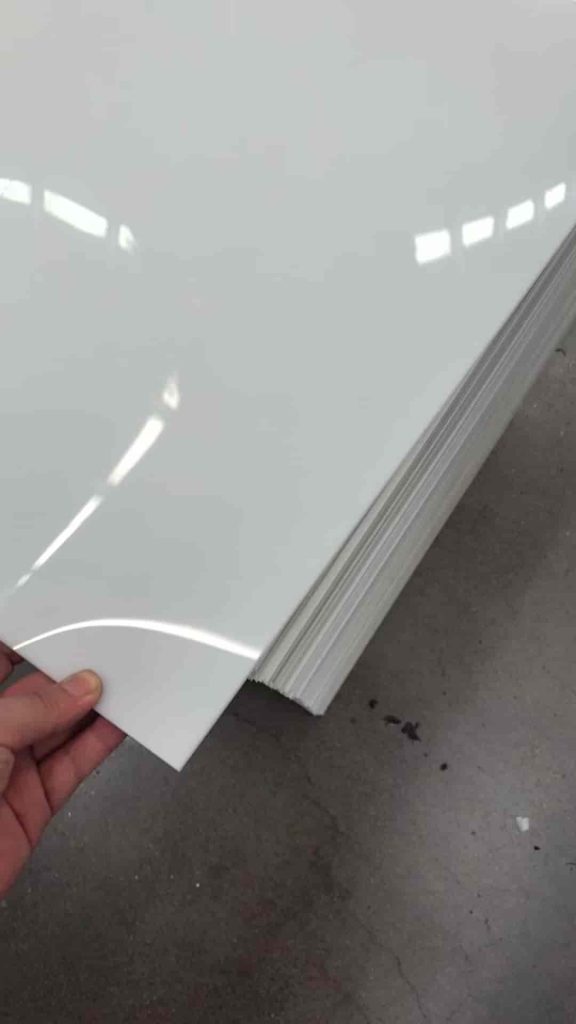
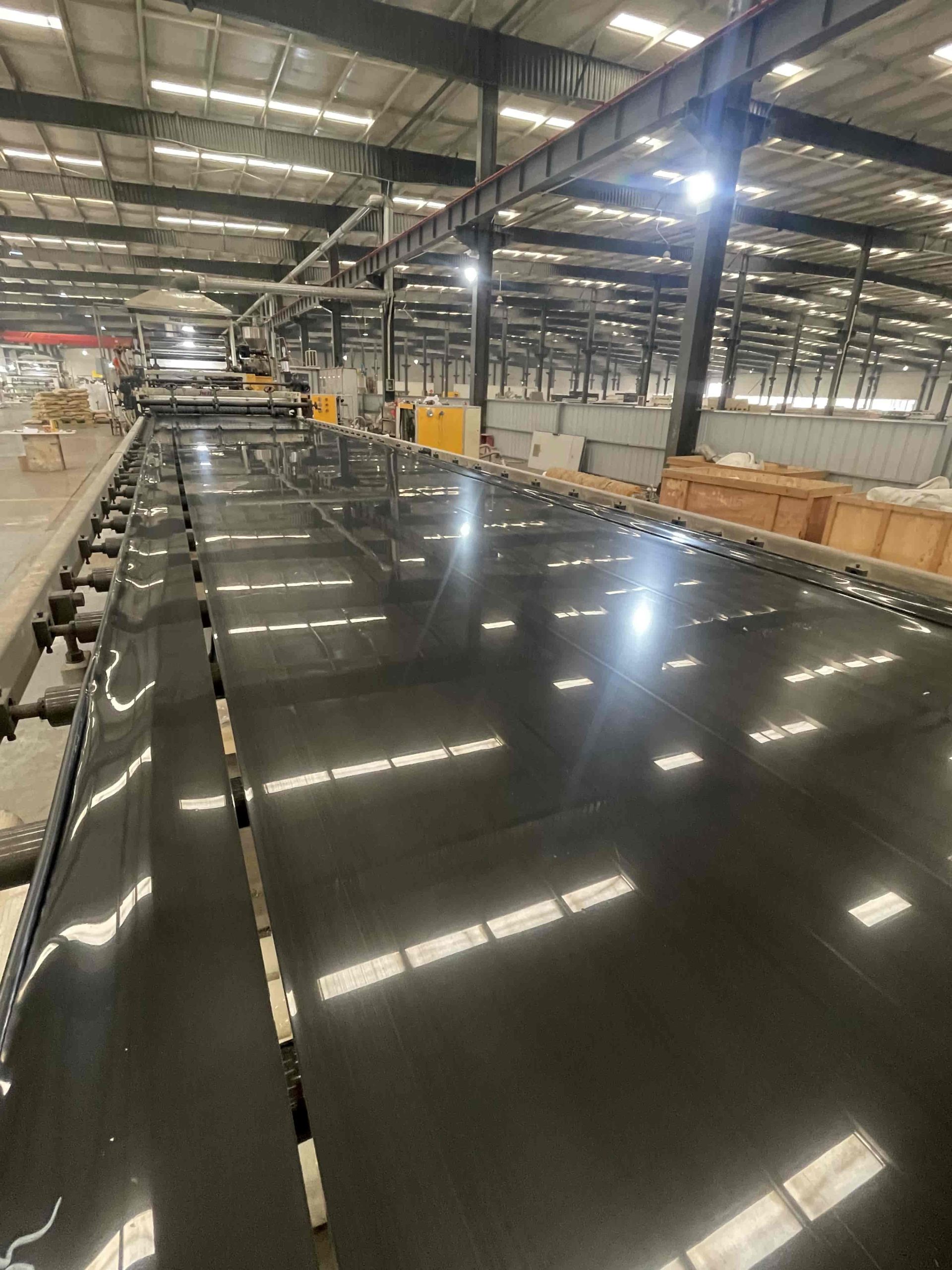
HDPE flame retardant sheet is a kind of engineering plastics with excellent comprehensive performance and various characteristics.
– It can be modified to produce flame-retardant, anti-static, anti-radiation and other special-purpose plates.
– Melt properties: polyethylene melt belongs to non-Newtonian fluid, its viscosity fluctuates less with the change of temperature, while the viscosity decreases quickly when the shear rate increases, and is linear, in which the decline of LLDPE is slower.
– Corrosion resistance: at room temperature, acid, alkali, salt corrosion of aqueous solutions, but not resistant to strong oxidizing agents such as fuming sulfuric acid, concentrated nitric acid and chromic acid.
– Solubility and water absorption: insoluble in general solvents at room temperature, small water absorption, with excellent electrical insulation properties, low density, good toughness (also applicable to low temperature conditions), good tensile, electrical and dielectric insulation, low water absorption, low water vapor permeability, chemical stability, tensile strength and other characteristics.
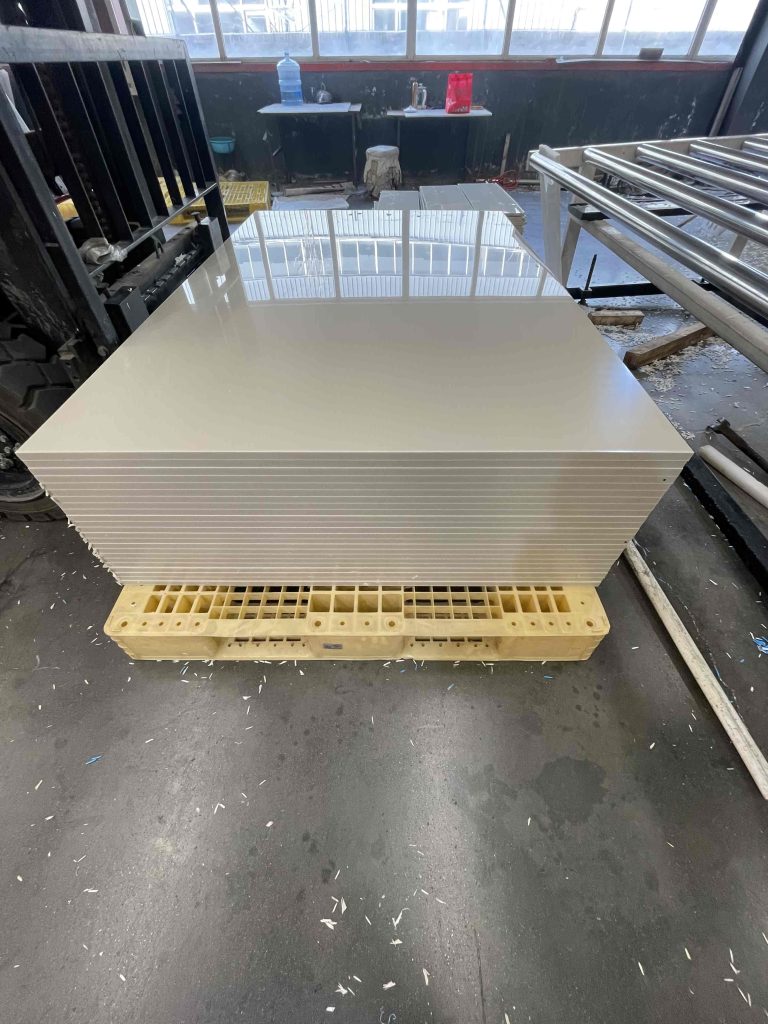
Performance characteristics of HDPE flame retardant sheet
Abrasion Resistance
In engineering plastics, high molecular weight polyethylene coal bunker liner and wear-resistant products with outstanding functional performance, the higher the molecular weight, the more wear-resistant, the performance exceeds that of many metal materials (e.g., carbon steel, stainless steel, bronze, etc.), for example, UHMW – PE pipe, can be used under strong corrosion and high abrasion experimental conditions for a period of time of 4 – 6 times that of the steel pipe.
Corrosion Resistance
It can maintain stable performance characteristics in acid and alkali solutions as well as corrosive solutions under 80℃.
Friction Coefficient
The coefficient of friction is 0.07, which can be widely used in bearings, bushings, sliders and other mechanical parts without the use of lubricants3.
Impact Resistance
Strong impact resistance, 66 times the impact strength of nylon 10 and 8 times that of PTFE; especially at low temperatures, the impact strength reaches the ideal value, providing a reliable guarantee for functional delivery systems.
Electrical Function
With high volume resistivity, it is suitable to be used as structural material for building electrical system engineering in a wide range of temperature and frequency.