
Electrochemical & Power: High-Performance Plastics for the Energy Sector
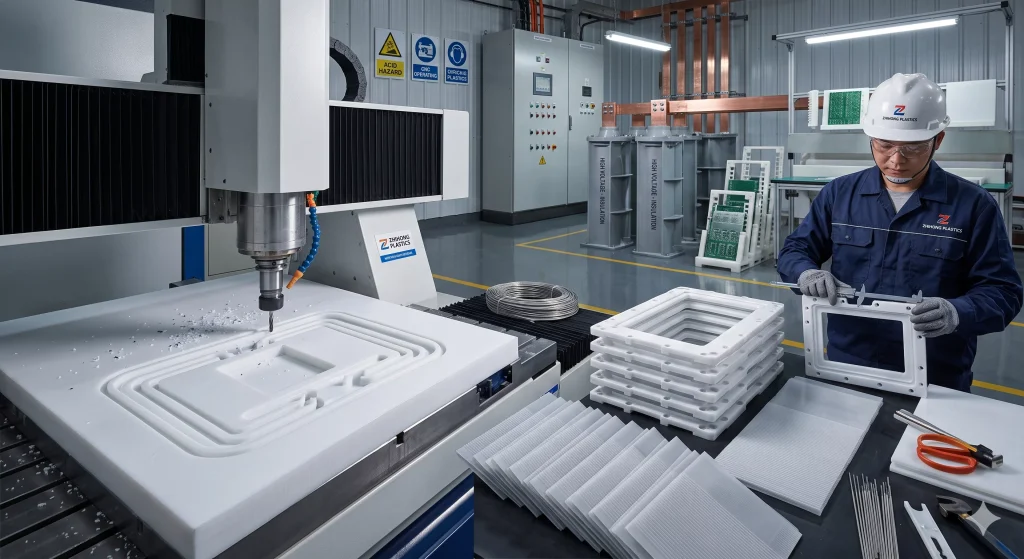
The global transition toward renewable energy, advanced energy storage, and high-efficiency electronics has placed unprecedented demands on industrial materials. In the electrochemical and power generation sectors, infrastructure must withstand extreme conditions that would rapidly destroy conventional metals or ceramics. Environments characterized by highly concentrated acids, caustic alkalis, intense electrical currents, and volatile electrochemical reactions require materials engineered for absolute chemical inertness and superior electrical insulation.
At Zhihong Plastics, we are at the forefront of providing premium engineering plastic solutions specifically formulated for these aggressive applications. By leveraging the advanced molecular structures of thermoplastic polymers, we supply manufacturers in the green hydrogen, energy storage, and microelectronics industries with the raw materials and fabricated components necessary to build safe, efficient, and long-lasting electrochemical systems. From robust insulation to complex structural frames, our plastics are the foundational building blocks of modern power infrastructure.
Core Electrochemical Application Scenarios
Our expansive inventory of high-density polymers is heavily utilized to fabricate the critical internal and external components of electrochemical cells and power distribution systems. Below are the primary industrial applications where our materials deliver unparalleled performance.
1. Battery Cell Separators
The energy storage industry is rapidly expanding, with a massive focus on grid-scale energy retention and industrial backup power systems. These systems rely heavily on large industrial batteries, such as flow batteries or lead-acid batteries[cite: 2]. Inside these massive energy storage units, the internal environment is violently corrosive, constantly bathed in highly concentrated sulfuric acid, vanadium electrolytes, or other aggressive chemical compounds.
To prevent catastrophic short circuits between the anode and cathode while allowing the necessary ionic transfer, these batteries require insulating acid-resistant separators[cite: 2]. Our premium PP Sheet Series is extensively used to manufacture these critical separators. Polypropylene offers an exceptional combination of high dielectric strength (electrical insulation) and near-total immunity to acidic degradation. When engineered into porous or precision-machined solid separators, our plastics ensure the long-term viability and safety of the battery cell, preventing thermal runaway and extending the operational lifespan of the industrial power bank.
2. Busbar Insulators
In massive industrial settings such as electrochemical refining plants, anodizing facilities, and industrial plating shops, immense amounts of electrical current must be safely routed to the processing tanks. This is achieved using heavy, live copper busbars. Because these busbars carry lethal amounts of high-voltage direct current (DC) and are located in environments saturated with conductive chemical vapors, proper electrical insulation is a matter of life and death.
Our advanced thermoplastic sheets are utilized as high-voltage insulating pads used to support live copper busbars[cite: 2]. These highly specialized insulators are strategically installed next to electroplating lines or electrolyzers[cite: 2]. Standard insulators made of ceramic can crack under heavy mechanical loads or thermal shock, while rubber can degrade when exposed to ozone and chemical fumes. However, by utilizing our specialized HDPE Sheet, facility engineers can machine rugged, impact-resistant insulating blocks that safely isolate the live copper busbars from the grounded steel superstructures. To ensure absolute safety against electrical tracking, many engineers consult our PE100 sheet anti-static treatment guides and dielectric property data before specifying materials for busbar supports.
3. Electrolyzer Cell Frames
The push for decarbonization has ignited the green hydrogen economy. Hydrogen gas is generated through the electrolysis of water, a process that occurs within complex electrolyzers. These systems, along with those in the traditional chlor-alkali industry, operate under extreme conditions involving highly corrosive wet chlorine gas, concentrated sodium hydroxide (lye), and intense electrochemical pressure.
Within these systems, our plastics are engineered into diaphragm insulation frames[cite: 2]. These specialized frames are heavily utilized within hydrogen production equipment or the chlor-alkali industry[cite: 2]. Because these frames must hold delicate membranes in place while sealing highly pressurized and corrosive gases and liquids, material failure is not an option. For these demanding applications, we often supply high-grade HDPE PE100 sheets which provide the ultimate structural rigidity and chemical inertness required to prevent hazardous leaks. To review how our materials stand up to these brutal alkaline and chlorine environments, industry professionals heavily rely on our rigorous HDPE sheet chemical resistance testing documentation.
4. PCB Plating Racks
The manufacturing of Printed Circuit Boards (PCBs) is a highly precise science. During the metallization and etching phases, the delicate circuit boards must be completely submerged in various baths of copper sulfate, tin-lead fluoroborate, and aggressive cleaning acids. To facilitate this, manufacturers utilize custom racks for suspending circuit boards into chemical solutions[cite: 2].
It is important to note that although used for electroplating, these are machined parts rather than tank bodies[cite: 2]. These racks must not only withstand the corrosive nature of the plating baths but also resist the plating process itself—meaning metal must not deposit onto the rack, which would waste valuable plating anodes and alter the electrical current distribution. By utilizing our Polypropylene (PP) Sheet to fabricate these racks, PCB manufacturers benefit from a lightweight, rigid, and non-conductive carrier that ensures perfectly even plating thicknesses across the entire circuit board batch. You can explore the vast adaptability of this material in our guide detailing broader polypropylene sheet uses.
Advanced Manufacturing: CNC Machining & Plastic Welding
The electrochemical and power generation sectors require components with zero margin for error. A leaking electrolyzer frame or a misaligned PCB plating rack can result in massive financial losses, environmental contamination, or severe industrial accidents. Because of the complex geometries and strict tolerances required in these industries, many of these application directions require extremely high CNC machining and plastic welding capabilities[cite: 2].
The Importance of Precision CNC Machining
Electrolyzer frames and battery separators often feature intricate flow channels, tight-tolerance O-ring grooves, and complex portings for fluid dynamics. These cannot be achieved through standard molding processes without incurring astronomical tooling costs. Our thick-gauge engineering plastics are designed to be highly machinable. Utilizing advanced 5-axis CNC routers, fabricators can mill our solid polymer sheets into highly precise structural components without inducing stress fractures or warping. If your facility requires pre-machined blanks or specific custom dimensions, our plastic sheet cut to size capabilities ensure you receive the exact material yields needed to feed your CNC machining centers efficiently.
The Critical Role of Plastic Welding
In many power applications, components must be joined together to create massive, monolithic structures. Using metal fasteners (screws or bolts) is impossible, as the metal would instantly corrode or cause an electrical short circuit. Therefore, structural integrity relies entirely on advanced plastic welding techniques, such as hot gas extrusion welding or butt fusion.
Our polymers are specifically formulated to melt and fuse seamlessly. When welded correctly by certified technicians, the welded joints of our PP or HDPE sheets retain up to 95% of the tensile strength of the parent material. This ensures that custom-welded electrolyzer frames and massive battery containment units can easily withstand the immense hydrostatic pressures and thermal expansions inherent in high-power electrochemical processing.
Fire Safety Considerations
In power distribution and battery storage, the risk of electrical fires and thermal runaway is a constant concern. When designing infrastructure that sits adjacent to high-voltage busbars or densely packed battery cells, engineers must factor in flammability ratings. For applications requiring strict UL94 V-0 fire ratings, we manufacture the Flame Retardant PP Board. This specially compounded polymer maintains all the exceptional chemical and electrical resistance of standard polypropylene but includes halogen-free fire retardants that self-extinguish within seconds of an arc flash or ignition event, thereby preventing catastrophic facility fires.
Engineering Calculators for Project Planning
Accurate material weight calculation is a foundational step in engineering any heavy-duty industrial system. Whether you are calculating the load-bearing requirements for a structural busbar support system, determining the shipping logistics for a massive order of battery separators, or programming the robotic lifting arms for your PCB plating lines, you need precise weight metrics.
To assist electrochemical engineers, procurement officers, and CNC fabricators, Zhihong Plastics provides a proprietary online weight calculator. By inputting your required dimensions and polymer type, you can instantly generate the data needed to finalize your project blueprints.
To have more accurate price,
you can use this unit converter to convert the inches unit to mm.
Please utilize the interactive calculator below to determine the exact weight of your custom thermoplastic sheets for your next power project:
Partner with the Experts in Industrial Polymers
The electrochemical and clean energy sectors are driving the future of global industry. To succeed, your technology requires structural materials that are completely reliable, chemically inert, and electrically secure. Zhihong Plastics has spent years perfecting our polymer formulations to support the most extreme, high-voltage, and corrosive environments on the planet.
Whether you require massive shipments of raw HDPE for machining electrolyzer frames, specialized flame-retardant PP for busbar insulators, or technical consultation on plastic welding parameters for your battery separators, our dedicated engineering team is standing by.
Do not compromise on the foundation of your electrochemical systems. Fill out the contact form below to request technical data sheets, discuss your custom CNC machining requirements, or receive a highly competitive factory-direct quotation for your next major project.

