

Industries that use robust and versatile materials must understand HDPE PE100. What distinguishes HDPE PE100? This guide details its outstanding strength and versatile uses. Discover HDPE PE100 pipe, material, and specification meanings. Discover why HDPE PE100 grade and density affect performance. Zhihong Plastic discuss HDPE PE100 features, applications, and standard. You may learn about HDPE PE100 pressure meaning and real-world usage in this guide. Let’s begin!

What Are the Main Uses of HDPE PE100 Sheets?
PE100 sheets are versatile and necessary across sectors. These high-density polyethylene sheets are notable for their strength-to-weight ratio. The PE100 designation stresses their high-grade categorization and durability. Their well-defined PE100 specification means they endure extreme pressure and environmental stress in heavy-duty applications. Their lightweight shape and PE100 density make them easy to handle while being strong. Thus, businesses use PE100 material meaning to meet project needs.
These sheets are used in plumbing systems due to their durability and PE100 standard compliance. The ability to endure high pressure is especially important in PE100 pipe meaning. Engineers use PE100 in chemical storage tanks and water distribution networks because of its chemical corrosion resistance. For tough infrastructure, engineers emphasize PE100 qualities including flexibility and heat stability. PE100 is used in construction, agriculture, and utilities, where reliability and performance are necessary. PE100 sheets excel at wear resistance and efficiency.
How Do I Choose the Right Thickness for HDPE PE100 Sheets?
Knowing PE100 sheet specs and matching them to project needs is key to choosing the right thickness. PE100’s high-density and durability vary with sheet thickness. PE100 pipe meaning means it can handle high-pressure situations for piping. Such heavy uses may require thicker sheets, while lighter sheets suit lightweight setups. Density and grade affect PE100 sheet performance under stress. PE100 ensures uniformity and reliability across sectors.
The intended PE100 application meaning and standard compliance also influence the selection. In industrial and agricultural contexts, thicker sheets can withstand external forces and wear. PE100’s chemical resistance and flexibility make it ideal for durable and adaptable constructions. Engineers also consider PE100 pressure to guarantee the thickness withstand internal loads without affecting the construction. These sheets support various industries, as PE100 is suitable for use in storage tanks and liners. Selecting the proper thickness maximizes performance and durability across applications.
Are HDPE PE100 Sheets Suitable for Outdoor Applications?
Due to their durability and environmental resilience, PE100 sheets are ideal for outdoor use. PE100 is known for its durability against UV radiation, moisture, and harsh temperatures. The PE100 meets strict quality standards. PE100 density increases its impact and wear resistance, while chemical stability prevents degradation from contaminants and chemicals. PE100 is suited for tough outdoor situations because to these properties.
Engineers and project managers like PE100 for its adaptability and applicability. Since PE100 has excellent qualities, these sheets are employed as liners. PE100 pipe meaning also works well in piping systems since it can withstand pressure and harsh circumstances. PE100 is used in construction, water management, and residential projects that require durability. PE100’s broad use shows its capacity to adapt to outdoor challenges and perform over time.
What Makes HDPE PE100 Sheets Different From Other HDPE Grades?
The performance and material qualities of PE100 sheets set them apart from other grades. PE100 emphasizes its high-quality categorization for demanding industrial needs. The PE100 specification makes these sheets more durable and pressure-resistant. Their PE100 density balances strength and weight. Their PE100 grade meaning meets strict safety and performance standards compared to regular grades.
PE100 sheets’ excellent properties expand their application area. Engineers use them in PE100 piping systems because they can withstand high pressures and environmental stress. PE100 sheets have excellent chemical and heat resistance. Many industries use PE100 sheets to build sewage systems, chemical storage facilities, and industrial tanks. These differentiators make PE100 sheets more reliable and perform better than other grades.
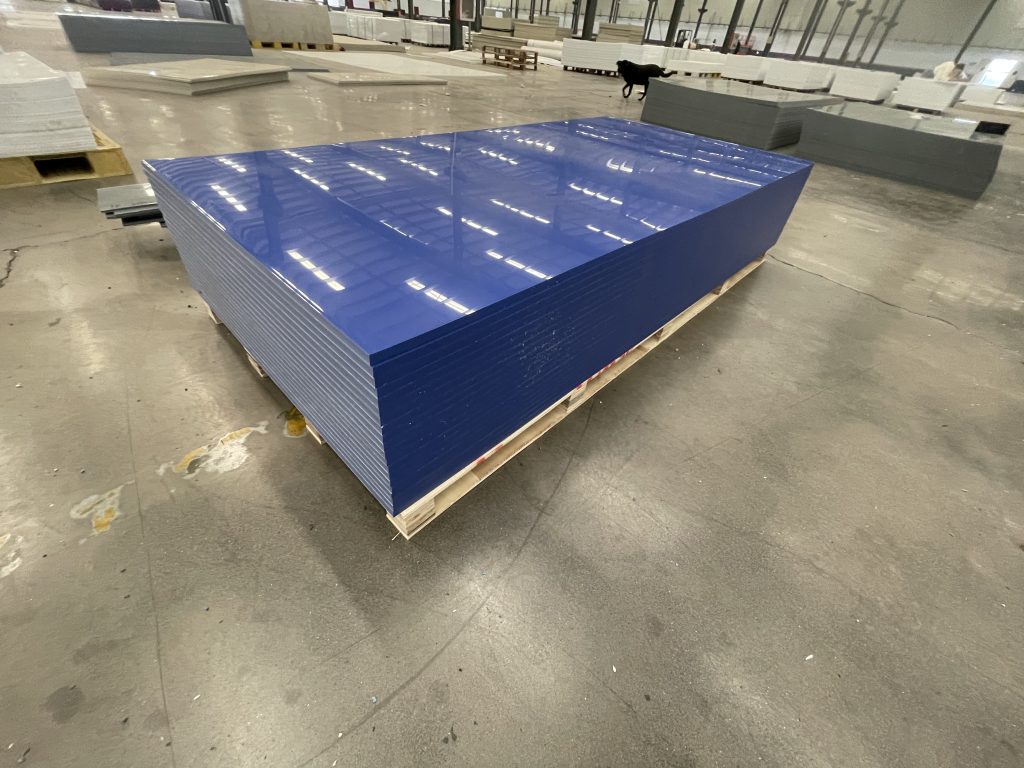
Why Choose Zhihong Plastic for HDPE PE100 Sheets
Zhihong Plastic is a renowned PE100 sheet supplier that meets industry standards. At Zhihong Plastic, we specialize in producing high-quality PE100 sheets that meet industry standards. Our sheets are durable, versatile, and designed for heavy-duty and lightweight applications. We ensure all PE100 sheets meet strict specifications for strength, density, and reliability. These sheets perform well in high-pressure systems and offer excellent thermal resistance and chemical stability. They are ideal for water management, construction, and industrial storage.
We provide reliable materials that meet the diverse needs of engineers and project managers across various industries. Contact us today to learn more about our products!
To compare material costs across grades and thicknesses, refer to our HDPE sheet pricing breakdown.
Deep-Dive Technical Notes
PE100 Sheets Property And Applications
Key Properties of PE100 Sheet
They have exceptional qualities that make them necessary in industry. High impact strength allows these sheets to sustain mechanical stress without cracking or breaking. Even in harsh situations, their resilience lets them perform for lengthy periods. They can withstand high-heat and sub-zero temperatures. Furthermore, their UV protection ensures its durability in outdoor applications. Their excellent chemical resistance prevents corrosion, and their low friction coefficient improves dynamic system efficiency. lso important is sheets' adaptability in satisfying various industrial applications. They excel in high-pressure applications that require strength and stability. Their ruggedness makes them ideal for outdoor use. Due to their mechanical and chemical qualities, they outperform other polyethylene sheets in challenging situations. The sheets come in various thicknesses. Sheets work well in businesses that need strong, durable materials due to their reliability.
Industrial Uses
The sheets perform well in high-pressure and severe situations. Many industries employ these sheets because they can tolerate high mechanical stress and remain stable under pressure. They provide reliability and safety for high-pressure pipes and systems. They can also be used in high-heat and sub-zero conditions due to their temperature resistance. This versatility allows businesses to use sheets for important activities that require durability and performance. Due to their versatility and durability. Even in tough climates, their UV resistance and chemical stability make them ideal outside use. Where sunshine and corrosives are frequent, construction, marine, and agricultural industries use these sheets. In dynamic systems like conveyor belts and sliding mechanisms, their low friction coefficient improves efficiency. PE100 sheets fulfill the needs of various industrial applications with their strength, durability, and resistance.
PE100 vs. Other Polyethylene Sheets
PE100 polyethylene sheets outperform others due to their excellent characteristics and performance. PE100 high-density polyethylene sheets are stronger and more durable than conventional grades. High impact resistance allows them to withstand mechanical stress without buckling. Also resist severe temperatures, UV exposure, and chemicals better than other grades. Industries that need durable materials in tough conditions select them due to these qualities. Another benefit of sheets is its adaptability to industrial applications. PE100 thermoplastic sheets perform well in high-pressure and outdoor applications, unlike other polyethylene sheets. Conveyor belts and sliding mechanisms. Long-lasting PE100 sheets reduce the need for replacements. These benefits and their ability to meet strict performance standards make sheets a high-performance material for industries that need reliability and durability.
Custom Thickness Options
It come in many thicknesses to meet industrial needs. Thin sheets for lightweight applications and thicker ones for heavy-duty applications are common. Industries can choose the best thickness for their projects due to this flexibility. Thinner PE100 thermoplastic sheets are utilized for flexibility, whereas thicker sheets are stronger for structural or high-pressure applications. These features make sheets precise and reliable for various industries. Additionally, customization options increase PE100 sheet versatility. These sheets can be customized for industrial needs such size, surface coatings, and performance treatments. UV-stabilised sheets are appropriate for outdoor applications, while chemical-resistant sheets are best for corrosive conditions. PE100 sheets meet and surpass high-performance material industry demands due to their versatility. PE100 sheets solve many industrial problems with their standard thickness and extensive customization choices. Zhihong Plastic offers high-quality PE100 sheets for various industrial applications. PE100 sheets are strong, versatile, and available in various thicknesses for your applications. Our sheets are suitable for high-pressure systems, outdoor use, and demanding environments. Our dedication to quality and innovation guarantees reliable products and excellent service. Trust Zhihong Plastic for PE100 sheets.
HDPE PE100 Sheets Complete And Full Guide From Zhihong Plastics
What Does 100 Mean?
The "100" in HDPE PE100 sheets indicates the material's minimum necessary strength, assessed by long-term internal pressure resistance. It specifies a minimum necessary strength (MRS) of 10 MPa to ensure sheets can sustain high stress and pressure without deforming or failing. Piping systems and industrial components need this categorization for durability and reliability. The strong and resistant to environmental stress cracking. The "100" also emphasizes the material's better performance above other HDPE sheets. It builds hardness, chemical resistance, and long-term stability under harsh conditions. They can be used indoors and outdoors in UV-, moisture-, and chemical-exposed environments. Professionals can choose materials for projects that require great performance and lifespan by understanding what does the 100 mean.
Key HDPE PE100 Sheet Properties
Many businesses favor due to their unique features. They are chemically resistant and durable in severe situations with frequent corrosion. Strong sheets can bear tremendous pressure and mechanical stress without compromising their structural integrity. Their small weight simplifies handling and installation. There are reliable for demanding applications because to these qualities. The sheets also resist environmental stress cracking. The ability to withstand UV radiation and harsh temperatures makes them excellent for outdoor use. There are non-toxic and food-safe. Professionals can use it for durable, chemical-resistant, and easy-to-use projects by understanding their qualities. These attributes improve their functionality, cost-effectiveness, and reliability in industrial and commercial applications.
HDPE PE100 Sheet Uses
Due to their durability and versatility, they are used in many industries. These sheets are used to make protective barriers, liners, and structural components in construction. Low weight simplifies installation, and chemical resistance provides long-term operation in harsh settings. With their corrosion resistance and ability to handle high-pressure fluids, HDPE PE100 sheets are perfect for water supply and sewage piping systems. These properties also make them suited for chemical or delicate industrial tanks and containers. In agricultural, they are used for irrigation and pond liners. Their UV resistance and outdoor durability make them reliable for long-term use in exposed situations. The food processing industry uses these sheets for cutting boards and food-grade containers since they are non-toxic and hygienic. By studying HDPE PE100 sheets' widespread uses, professionals may use their specific features to fulfill project needs.
Other Plastics Comparison
HDPE PE100 sheets outperform other plastics in strength, durability, and chemical resistance. HDPE PE100 sheets are stronger than ordinary HDPE sheets and can be used in high-pressure applications like pipe systems and industrial tanks. Even in extreme settings, their environmental stress cracking resistance assures long-term durability. HDPE PE100 sheets are ideal for sectors that need strong, durable materials because they don't degrade or weaken under chemical exposure. HDPE PE100 sheets are UV-resistant. Other plastics can grow brittle in the sun. They are lighter than heavier options. The non-toxicity and food safety of HDPE PE100 sheets make them useful in food processing and water supply systems. Considering these features, HDPE PE100 sheets beat many other plastic materials in strength, adaptability, and long-term performance.
HDPE PE100 Sheet Outdoor Suitability
Due to their environmental resistance, HDPE PE100 sheets are ideal for outdoor application. UV protection protects these sheets from sun-induced deterioration and brittleness. Additionally, its exceptional temperature resistance assures reliable performance in hot and cold regions. This makes them perfect for outdoor plumbing systems, protective barriers, and agricultural liners. Chemical resistance reinforces their longevity. HDPE sheets also retain their mechanical qualities in harsh outside situations. Their lightweight design simplifies outside installation. They are safe for water storage tanks and irrigation systems due to their non-toxic and eco-friendly composition. Professionals can easily choose HDPE PE100 sheets for outdoor applications that require durability, UV resistance, and long-term performance. These properties make them ideal for outdoor sectors that need reliable solutions.
HDPE PE100 Sheet Fabrication and Welding
HDPE PE100 sheets can be manufactured and welded precisely and durably utilizing specialist methods. Due to its lightweight and machinable qualities. Professionals employ CNC machines or sharp-bladed hand instruments to cut cleanly. Due to its low friction surface, the material can be easily fabricated into bespoke forms and components for diverse purposes. These approaches preserve the structural integrity of hdpe plastic sheet. HDPE PE100 sheets are welded using butt fusion, extrusion, and hot gas. Most often, sheets are heated and pushed together to make a smooth junction using butt fusion. A heated plastic rod bonds sheets in extrusion welding. However, hot gas welding uses a heat gun to melt sheets and a filler rod to join them. These welding methods make HDPE PE100 sheets perfect for leak-proof and durable assemblies since the connections are as strong as the original material.
Why Buy HDPE PE100 Sheets from Zhihong Plastics?
We are an expert HDPE PE100 sheet manufacturer with a dedication to quality. Our innovative production methods ensure every sheet meets industry strength, durability, and performance standards. We innovate and improve our processes to meet industry needs. Our HDPE PE100 sheets are reliable for construction, pipeline, and industrial applications due to our commitment to quality. We excel at customized project solutions for diverse industries. Professionals seeking versatile and durable materials like our HDPE PE100 sheets in various sizes, thicknesses, and specifications. Our thorough quality control and responsive support show our dedication to customer satisfaction. As your trusted partner, we prioritize quality and innovation in every product.
Methods And Benefits Of PE100 Sheet Anti-Static Treatment
Common PE100 Sheet Anti-Static Treatments
Internal additives and external surface treatments are common PE100 sheet anti-static treatments. In extrusion, certain compounds are blended into the polymer matrix as internal anti-static additives. Making the PE100 sheet conductive polymer provides persistent static dissipation. By adding these chemicals, producers prevent static charge throughout the sheet's life. This method is ideal for long-term electrostatic discharge (ESD) protection. Another way to control surface resistivity is via external anti-static coatings and treatments. Topical sprays, dips, or coatings are applied on PE100 sheets. HDPE sheet anti-static surface treatment temporarily lowers static electricity. This approach is flexible and easy to apply, but it may need frequent reapplication to work. Industries that need short-term static dissipation or customized anti-static performance should use this method. When compared, internal and external therapies offer advantages. Internal anti-static additive integration ensures durability and performance for long-term applications. External anti-static coatings allow users to customize treatment. External approaches may not last as long as internal ones. Understanding these possibilities helps firms choose the best way to make PE100 sheets anti-static.
Key benefits and performance gains
Electrostatic discharge (ESD) protection from anti-static treatment makes PE100 sheets safer and more useful. Static electricity can cause sparks in volatile conditions, but this treatment avoids it. This functionality benefits industries handling combustible materials or delicate electronics. The HDPE sheet static dissipation treatment controls static energy discharge. Anti-static treatment reduces surface resistance. Lower surface resistivity reduces dust and particles on PE100 sheets. In cleanrooms and factories, this capability is especially useful. To preserve operating efficiency and product quality, the treatment controls surface resistivity to prevent impurities from sticking to the sheet. Treating PE100 sheets improves their toughness and lifetime. Anti-static additives or coatings improve wear and chemical resistance. External coatings allow flexibility for individual applications, while internal treatments provide long-term stability without affecting the sheet's physical qualities. Using both processes helps the material resist tough environments and perform consistently. Therefore, anti-static treatment improves safety, cleanliness, and lifespan of PE100 sheets.
Anti-Static PE100 Sheet Industries Benefit
Anti-static PE100 sheets are necessary for electronics and semiconductor fabrication. Cleanrooms need these sheets to control static to protect sensitive components. Manufacturers use them to handle and package electronic parts to protect fragile circuits from static electricity. The HDPE sheet static dissipation treatment reliably controls the environment for high-precision operations. In chemical and pharmaceutical operations, anti-static PE100 sheets improve safety. Industries utilize these sheets in flammable dust or vapor settings where static sparks could cause accidents. The sheets reduce static electricity buildup. They are reliable for these industries because of their chemical resistance and endurance in demanding processing conditions. Anti-static PE100 sheets help with bulk handling and material conveying. To reduce friction and static, industries line chutes, silos, and hoppers with these sheets. This application eliminates material obstructions and streamlines bulk material handling systems. The PE100 sheet surface resistivity control prevents static charges from disrupting material flow. These examples demonstrate the importance of anti-static PE100 sheets in static-sensitive industries.
Performance Testing and Validation
Performance testing and validation are needed to prove PE100 sheet anti-static treatment works. Standard procedures like ASTM D257 surface resistivity testing quantify a material's static electricity control. Electrical flow resistance of the sheet's surface is tested to prevent static charge. In addition, the FTMS 101C static decay rate test measures how quickly a material dissipates static electricity. These methods reliably measure static control in treated PE100 sheets. Anti-static performance testing helps preserve application quality. Manufacturers employ these tests to verify PE100 sheet surface resistivity control satisfies industry standards. They discover performance deviations to ensure optimal static dissipation under real-world settings. This approach proves the treatment's efficacy and provides confidence in its durability. These tests also assist industries choose the best anti-static treatment. Environments that need rapid static electricity reduction may prefer materials with faster static decay. Applications requiring lasting static control may use surface resistivity measures. Industries can leverage PE100 sheet anti-static treatment benefits by matching testing results to application requirements. This ensures that sheets perform consistently regardless of operational problems. Zhihong Plastic stands as a trusted leader in the field of high-performance engineering plastics, offering innovative solutions like PE100 sheet anti-static treatments that meet the highest industry standards. With a commitment to excellence and a focus on advanced research and development, we ensures reliable, durable, and effective products tailored to diverse industrial needs.
PE100 Sheet Color Uniformity In Industrial Applications
For pipe-grade applications, HDPE acid resistance is a deciding factor — PE100’s higher density formulation holds up in acidic effluents where standard PE softens.
Production Factors Affecting PE100 Sheet Color Uniformity
Production pigment dispersion analysis is important to PE100 sheet color uniformity. Pigment discrepancies impact sheet appearance and performance. To produce consistent color, manufacturers must properly disperse pigments throughout the polymer matrix. This procedure demands specialized technology and careful supervision to avoid streaking or patchiness. PE100 sheet masterbatch quality control also helps maintain homogeneity. High-quality masterbatches mix colors and additives. Variations in production circumstances make HDPE sheet color variance minimization difficult. Inconsistent coloration can result from temperature, pressure, or feed rate changes. External factors like raw material quality and equipment calibration can also affect the product. To identify and fix these flaws, manufacturers must use stringent quality control procedures like HDPE sheet color consistency testing. Manufacturing parameters can be optimized and strict control maintained to reduce color fluctuation and assure PE100 sheet color uniformity across all applications.
Uniforming PE100 Sheet Color
Start with HDPE sheet color matching standards for PE100 sheet color uniformity. These standards specify color consistency across production batches. These standards help manufacturers maintain homogeneity, especially in visual and functional applications. Following these benchmarks reduces differences and ensures the product satisfies industry standards. These standards also simplify quality control. Uniform pigmentation is improved by PE100 sheet dye distribution optimization. Advanced methods ensure equal dye dispersion throughout the polymer matrix. Modern PE100 sheet uniform pigmentation procedures including controlled extrusion and mixing ensure color consistency. These procedures enhance the quality and reliability of industrial sheets while improving their appearance. Manufacturers achieve PE100 sheet color uniformity using exact standards and improved methods.
PE100 Sheet Color Uniformity Issues
Multi-layer PE100 sheet manufacture often presents color uniformity challenges. Variations in pigment dispersion across layers can cause color discrepancies. Extrusion often unevenly distributes pigments, especially when numerous layers demand exact color alignment. Manufacturers struggle with PE100 sheet multi-layer color consistency due to material property changes between layers. HDPE sheet color stability under UV exposure is another major issue. Sunny conditions can fade or discolor the sheet. UV-resistant additives and strict HDPE sheet visual appearance quality control must be used to fix this. These issues can be solved with enhanced pigment dispersion, optimum extrusion, and tight quality control. Manufacturers can reduce discrepancies and guarantee PE100 sheets satisfy industrial standards by taking these steps.
PE100 Sheet Color Uniformity Testing Methods
We use modern HDPE sheet color consistency testing to certify PE100 sheet color uniformity. Spectrophotometry assesses sheet color accuracy and consistency. Colour variance is also detected by manufacturers using controlled illumination visual inspections. Surface and multi-layer investigation are important to PE100 sheet pigment dispersion evaluation. These analyses prevent streaks and spots in the sheet by equally distributing pigments. Combining these methods lets manufacturers spot and fix errors early in production. Advanced tools improve industrial PE100 sheet color uniformity verification. High-resolution imaging technologies enable accurate quality control by revealing the sheet's appearance. Automatic HDPE sheet visual appearance quality control solutions streamline testing and ensure consistent results across high production volumes. Manufacturers also evaluate HDPE sheet color stability under UV exposure with specialist equipment to ensure long-term outdoor performance. These techniques and methods ensure PE100 sheets fulfill strict industrial color consistency and reliability criteria.
Does PE100 Sheet Color Uniformity Affect Performance?
PE100 sheet color homogeneity affects industrial functional reliability. Consistent color distribution ensures material structural integrity and performance under diverse situations. Uneven pigmentation may suggest production inconsistencies that cause sheet weaknesses or flaws. Uniform hue helps the sheet achieve strict quality standards. PE100 sheet pigment dispersion analysis ensures reliable performance in varied industrial conditions for manufacturers. End-user satisfaction also depends on consistent hue. Industrial applications require materials that perform well and look good. The building and packaging industries require HDPE sheet color consistency testing to maintain a professional appearance. Uniform pigmentation decreases visible faults. Manufacturers may exceed functional and aesthetic demands with PE100 sheet color consistency. In the pursuit of excellence and innovation, Zhihong Plastic stands as a trusted leader in the production of high-performance PE100 sheets. we make sure that every product has great color consistency and dependability by using cutting-edge technology, strict quality control, and a dedication to accuracy.
PE100 Sheet Machining Precision And Key Factors To Consider
Fabrication Factors Affecting PE100 Sheet Machining Precision
HDPE sheet dimensional tolerance control greatly affects PE100 sheet machining precision. With accurate tolerances, sheets satisfy exact specifications. Dimensional variations can cause misalignments or functional inefficiencies. To achieve consistency, manufacturers must use stringent monitoring systems and advanced measurement techniques. Precision also depends on machining tool calibration. Calibrated tools reduce machining variations. PE100 sheet machining precision is further impacted by HDPE sheet burr-free machining challenges. The sheet's surface and usefulness can be compromised by burrs. These defects often stem from incorrect cutting or old instruments. Manufacturers must use improved cutting technologies and maintain their equipment to meet this. High-precision cutting and enhanced tool performance reduce burrs and increase sheet quality. Manufacturers can improve machining precision and produce PE100 sheets that meet industrial standards by focusing on these elements.
High Methods
Advanced cutting techniques are needed for PE100 sheet machining precision. These methods ensure tight tolerances. Manufacturers utilize sophisticated cutting tools to minimize deviations and preserve accuracy during manufacturing. Controlling cutting parameters like speed and feed rate is also important for optimal outcomes. By focusing on these features, producers may make PE100 sheets that meet strict industrial standards. HDPE sheet surface finish optimization improves machining precision and quality. Smooth sheets look nicer and function better in low-friction situations. Advanced polishing and finishing procedures remove defects for a pristine surface. Multi-axis HDPE sheet machining lets producers construct complex designs with high accuracy. These capabilities allow precise edge profiling and detailed designs.
PE100 Sheet Machining Precision Issues
Maintaining PE100 sheet machining precision, especially edge profiling during manufacturing, is difficult. Incorrect tool alignment or wear causes edge profiling variations that reduce sheet dimensional accuracy. Variations in material qualities like density or thickness might complicate profiling. These concerns affect the sheet's appearance and ability to meet industrial tolerances. Manufacturers must use modern profiling methods and maintain tools to achieve consistent findings. Issues with HDPE sheet machining repeatability testing are also significant. Variable machining variables like temperature or tool vibrations might affect repeatability. In applications that require precise dimensions, these discrepancies affect the sheet's performance. Manufacturers need real-time monitoring and improved calibration technologies to fix these difficulties. Automating machining reduces human error and improves repeatability. Addressing these problems allows manufacturers to ensure PE100 sheets meet industrial application requirements while retaining high machining precision.
Does Machining Precision Impact PE100 Sheet Performance?
PE100 sheet machining precision affects industrial functional reliability. The sheets must satisfy exact specifications for structural integrity and performance under difficult conditions, thus accurate machining is necessary. Inconsistent machining might cause dimensional errors that affect the sheet's performance. Variations in PE100 sheet CNC machining accuracy might cause misalignments or weak areas. To maintain precision, manufacturers must prioritise tight tolerance fabrication and advanced machining. Machining accuracy affects end-user satisfaction and application success. Industrial applications need reliable, attractive, and practical materials. While assuring smooth operation in low-friction applications, HDPE sheet surface finish optimization improves aesthetics. Each sheet fulfills complicated geometries and high-performance environment specifications with precision edge profiling and repeatability testing. Manufacturers can deliver PE100 sheets that meet industrial users' strict requirements with high machining precision.
Tools and Methods
Advanced CNC machining equipment is needed for PE100 sheet machining precision. Advanced CNC machines allow producers to achieve tight tolerances and consistent outputs by precisely controlling cutting settings. These machines are suitable for complicated designs since they support complex geometries. Automated systems decrease human error and improve repeatability. Manufacturers may retain accuracy and efficiency in machining by using sophisticated CNC technology. HDPE sheet dimensional tolerance control requires calibration instruments. Regular calibration keeps machining tools within parameters. Precision measuring tools like laser alignment systems detect and repair tool misalignments for consistent performance. Quality assurance requires HDPE sheet machining repeatability testing. Manufacturing companies utilize modern testing equipment to verify machining uniformity between production runs and uncover flaws before they affect the final product. PE100 sheets fulfill industrial requirements while preserving machining precision with these tools and methods. Zhihong's expertise in high-performance extruded engineering plastics ensures unmatched precision in PE100 sheet machining. When you choose Zhihong, you are partnering with a trusted leader dedicated to delivering reliable, high-quality solutions tailored to your needs. Let Zhihong be your go-to expert for precision and performance in PE100 sheet machining.
PE100 Sheet Dimensional Accuracy And Key Factors To Consider
Factors Affecting PE100 Sheet Fabrication Dimensional Accuracy
PE100 sheet dimensional accuracy relies on HDPE sheet dimensional stability testing to preserve dimensions under different situations. Dimensional stability testing detects material shrinkage or expansion. If manufacturers skip this step, dimension variations may affect sheet performance in important applications. Additionally, PE100 sheet manufacturing tolerance optimization is important for precision. Manufacturers can reduce errors and create sheets that satisfy specifications by refining production methods and defining tolerance limits. PE100 sheet dimensional accuracy is sometimes compromised by HDPE sheet flatness and warpage analysis. Warpage or uneven surfaces can result from incorrect cooling or material stress during manufacture. Issues impact the sheet's appearance and fit or function in some applications. Manufacturers must optimize manufacturing parameters and use advanced flatness analysis to overcome these issues. They can assure PE100 sheet dimensional correctness during fabrication by focusing on these elements.
PE100 Sheet Dimensional Accuracy Methods
Manufacturing PE100 sheets requires advanced precision measurement procedures to assure dimensional accuracy. These approaches provide reliable data for sheet dimension assessment during manufacture. Laser micrometers and CMMs ensure PE100 sheet thickness tolerance control with exact measurements. To reduce mistakes and variances, measurement equipment must be calibrated regularly. HDPE sheet size consistency calibration helps producers find and resolve dimensional differences early. This proactive technique improves dimensional stability and ensures sheets satisfy strict quality standards. Another key to precision is following PE100 sheet dimensional inspection standards. These standards define sheet dimensions. Warpage and flatness variations can be detected by regular inspections and enhanced testing. Using production data and process modifications, manufacturers may optimize PE100 sheet manufacturing tolerance. This continuous improvement technique reduces dimensional variances. Manufacturers can meet industrial application demands for PE100 sheet dimensional accuracy by using precision measurement, consistent calibration, and tight inspection requirements.
PE100 Sheet Dimensional Accuracy Issues
PE100 sheet dimensional correctness is difficult to maintain, especially throughout manufacture. Inconsistencies in HDPE sheet dimensional deviation analysis can result from temperature changes and cooling shrinkage. Deviations in thickness, flatness, or dimensions affect the sheet's industrial performance. Incorrect machinery calibration or worn-out cutting tools can also make precise measurements difficult. Such constraints emphasize the need for robust monitoring systems and regular equipment maintenance to maintain dimensional stability. Inconsistent PE100 sheet quality control for dimensions can be caused by a number of circumstances. In extrusion or molding, raw material parameters like density and melt flow rate can affect sheet behavior. Warpage or size irregularities can also result from poor process control, such as inconsistent cooling rates or tension during manufacture. Advanced solutions, such automated HDPE sheet accurate cutting and shaping equipment, must be implemented by manufacturers to address these issues. These devices reduce human error and maintain cutting settings for precision. Real-time monitoring and quality checks can also assist discover and fix issues quickly. PE100 sheet makers can overcome obstacles and maintain high dimensional accuracy by addressing these variables.
Does Dimensional Accuracy Affect PE100 Sheet Performance?
Industrial functional dependability depends on PE100 sheet dimensional correctness. Correct measurements guarantee that sheets fit neatly into their assemblies. Dimensional perfection strengthens sheets. For load-distribution applications, PE100 sheet thickness tolerance control provides homogeneity. Dimensional precision is necessary for manufacturers to achieve strict performance standards. Dimensional perfection also helps industrial applications succeed. Inconsistent dimensions can delay operations, raise maintenance costs, and lower user satisfaction. To ensure sheet performance in difficult conditions, producers use HDPE sheet dimensional stability testing and PE100 sheet precision measurement techniques. PE100 sheet dimensional inspection standards reduce variations. Manufacturers may ensure PE100 sheets fulfill industrial users' high standards by focusing on these characteristics.
Methods for Verifying PE100 Sheet Dimensional Accuracy
To assure precision and reliability, PE100 sheet dimensional accuracy verification requires specialized technologies and methods. Laser micrometers and coordinate measuring machines (CMM) provide accurate PE100 sheet precision measurement techniques. These tools accurately measure thickness, width, and length. Optical scanners and 3D measurement equipment detect even modest HDPE sheet flatness and warpage. These innovative systems improve measurement accuracy and streamline inspection. Manufacturers can quickly find and fix dimensional errors with automated methods and real-time monitoring. HDPE sheet size uniformity and dimensional stability depend on calibration instruments. Regular calibration of measurement devices with recognized reference standards reduces mistakes. Gauge blocks and calibration fixtures reduce dimensional variations by verifying cutting and shaping equipment precision. Thermal stability analysis and stress-relief testing assess HDPE sheet dimensional stability and deviation under different situations. These technologies help producers spot shrinkage and warping and fix them. Manufacturers can meet industrial application requirements for PE100 sheet dimensional accuracy by using advanced measurement equipment, precise calibration tools, and rigorous testing processes. Precision and quality make Zhihong Plastic a trusted leader in high-performance engineering plastics. Our innovation helps us make PE100 sheets with precise dimensions. Selecting Zhihong means working with an exceptional company. This partnership optimizes industrial application performance and reliability. Trust Zhihong for precision-engineered plastics.
Anti-static PE Sheet Complete Guide
What Makes Anti-static PE Sheet Unique
Regular plastics usually trap electrical charges on their surface. Consequently, this trapped electricity creates sudden sparks. An anti-static PE sheet prevents this dangerous situation entirely. Manufacturers add specific conductive compounds during the production process. For example, carbon powder or special chemical agents mix into the base plastic. Therefore, the finished sheet gains the ability to dissipate electrical charges safely. The surface resistivity measures how well a material handles electricity. Typically, an anti-static PE sheet features a surface resistivity between 10^6 and 10^9 ohms per square. This exact range ensures charges flow away slowly and safely. In contrast, standard plastics have a much higher resistance. As a result, standard plastics hold onto dangerous static charges. Additionally, this modified polyethylene maintains its core physical strength. Thus, it remains tough, durable, and highly reliable for heavy industrial use.
Top Industrial Applications for Anti-static PE Sheet
Many industries rely on this material daily. Specifically, companies choose an anti-static PE sheet to protect sensitive equipment and personnel. Below, we outline the top applications.
Electronics Manufacturing Environments
Electronic components break easily when exposed to static shocks. Therefore, electronics factories line their assembly tables with an anti-static PE sheet. This material creates a safe workspace for workers handling delicate microchips. Furthermore, manufacturers use this plastic to build safe storage cabinets. Consequently, circuit boards remain safe from hidden electrical damage during the entire production cycle.
Cleanroom Facilities
Cleanrooms require absolutely dust-free environments. Interestingly, static electricity attracts dust particles from the air. Therefore, cleanroom designers install anti-static PE sheet panels on walls and workstations. This installation stops dust from sticking to surfaces. As a result, pharmaceutical and semiconductor companies maintain perfectly sterile rooms. In addition, cleaning crews can wash these smooth surfaces quickly and easily.
Explosive Chemical Plants
Chemical plants handle flammable gases and volatile liquids. A tiny static spark can ignite these dangerous substances. Consequently, safety engineers heavily utilize anti-static PE sheet materials in these hazardous zones. They build chemical tanks, pipe supports, and protective barriers with this plastic. This simple choice prevents catastrophic fires. Ultimately, worker safety increases significantly in these locations.
Conveyor Systems and Automation
Fast-moving conveyor belts generate massive amounts of friction. Naturally, this friction creates massive static buildup over time. To solve this, engineers install anti-static PE sheet wear strips along the conveyor lines. These strips discharge the electricity safely into the ground. Furthermore, the material offers very low friction. Thus, products slide smoothly down the production line without any electrical interference.
Core Benefits of Anti-Static Plastic Materials
You might wonder why engineers prefer polyethylene over other anti-static materials. First, an anti-static PE sheet offers incredible impact resistance. Heavy tools will not easily crack or break the surface. Second, the material strongly resists dangerous chemicals and harsh acids. Therefore, industrial spills do not ruin the plastic panels. Moreover, this material features near-zero moisture absorption. Standard materials swell or warp when exposed to water. However, an anti-static PE sheet remains perfectly flat and stable in wet environments. In addition, the material weighs very little compared to metal alternatives. Consequently, installation crews can lift and install these large plastic boards without heavy machinery. Finally, the cost-effectiveness makes it an easy choice for massive industrial projects.
Maintenance and Storage Instructions
Proper care extends the lifespan of your anti-static PE sheet significantly. First, you must clean the surface regularly. Dust buildup can slowly reduce the anti-static properties. Therefore, workers should wipe the boards using a soft cloth and mild soapy water. You must strictly avoid highly abrasive cleaning pads. Abrasive tools scratch the surface and damage the conductive outer layer. Furthermore, avoid using strong chemical solvents for daily cleaning. Solvents like acetone can degrade the special additives inside the plastic. Next, you must consider storage conditions carefully. Always store an anti-static PE sheet perfectly flat on a level pallet. Leaning the sheets against a wall causes permanent warping over time. In addition, keep the stored materials away from direct sunlight. Prolonged ultraviolet exposure eventually weakens the polymer chains. Installation requires a few specific steps as well. For instance, always allow the sheets to adapt to the room temperature before cutting them. Plastic expands and contracts with temperature changes. Consequently, cutting a cold sheet might result in inaccurate dimensions later. Follow these simple guidelines to maximize the value of your plastic investment.
PE100 virgin resin is also the basis for a food grade HDPE sheet used in food-contact and processing equipment.
For formed parts, choosing a thermoformable HDPE sheet with the right grade and gauge matters — our forming guide breaks down what to look for.



