
Laboratory & Cleanroom Plastics: Ultra-Pure Engineering Solutions
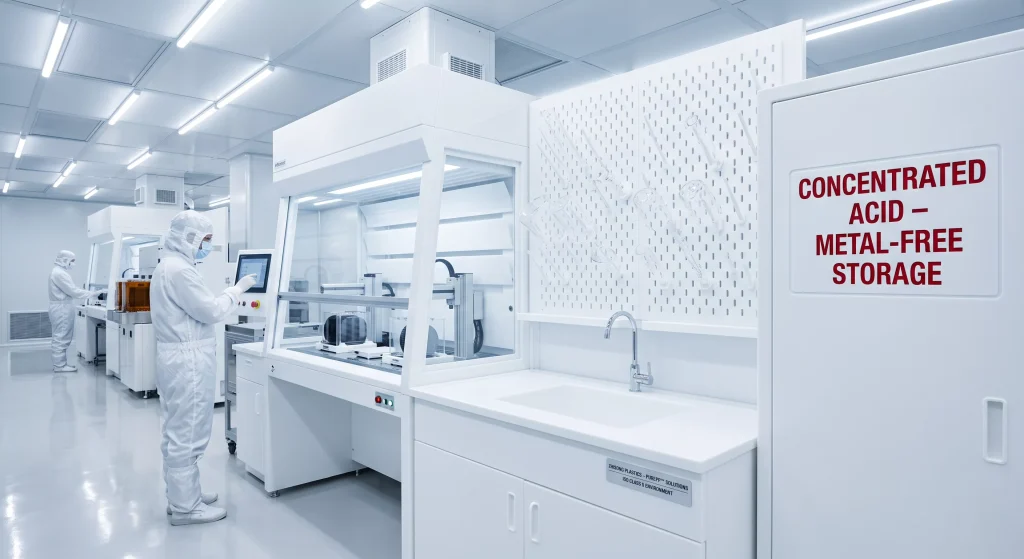
In the highly regulated and technologically advanced sectors of scientific research, biotechnology, and semiconductor manufacturing, the materials utilized to construct the operational infrastructure are just as critical as the processes themselves. Environments such as laboratories and semiconductor cleanrooms operate under stringent contamination control protocols. These fields require extremely high material purity, specifically meaning they must not precipitate metal ions[cite: 1]. The presence of even trace amounts of heavy metals, particulates, or outgassing chemicals can lead to catastrophic failures in semiconductor wafer yields or compromise sensitive analytical chemistry experiments.
At Zhihong Plastics, we engineer and supply top-tier engineering plastic sheets specifically designed to meet the rigorous demands of ISO-classified cleanrooms and highly corrosive laboratory settings. By replacing traditional metals and susceptible alloys with our advanced thermoplastic solutions, facility managers can ensure an environment that is completely free from rust, corrosion, and microscopic metallic contamination.
Critical Applications in Laboratories & Semiconductor Facilities
Our expansive inventory of advanced polymers is utilized to fabricate the essential architectural and functional components of modern cleanrooms and laboratories. Below are the primary applications where our materials serve as the foundational infrastructure.
1. Wet Bench Stations
In the microelectronics and semiconductor industries, the fabrication of silicon wafers involves aggressive chemical etching and cleaning processes. These procedures utilize highly volatile solutions, including Hydrofluoric Acid (HF), Sulfuric Acid, and Hydrogen Peroxide. Wet bench stations are the core workstations for semiconductor wafer cleaning equipment, and they are assembled almost 100% using welded pure white PP or PVC boards[cite: 1].
The selection of pure white Polypropylene (PP) Sheet is intentional. It provides exceptional resistance to strong acids and bases while maintaining absolute structural integrity under continuous fluid exposure. Furthermore, the brilliant white color aids technicians in visually identifying any microscopic dark particulates or spills that could contaminate the wafer batch. By utilizing our premium PP sheets, fabricators can seamlessly weld the joints of the wet bench, ensuring a monolithic, leak-proof, and entirely metal-free washing environment that guarantees zero ion leaching into the processing baths.
2. Acid-Resistant Countertops
Modern chemical and analytical laboratories handle a vast spectrum of corrosive reagents on a daily basis. Standard countertops made of epoxy resin, phenolic resin, or stainless steel can degrade, stain, or pit over time when exposed to concentrated acids, alkalis, or aggressive organic solvents. Our high-density plastics serve as anti-corrosion operation surfaces for chemical laboratories[cite: 1].
By upgrading to our robust HDPE Sheet materials, laboratories benefit from a surface that is virtually indestructible by most laboratory chemicals. High-Density Polyethylene is inherently non-porous, meaning it will not absorb hazardous biological agents or toxic chemical spills, thereby preventing cross-contamination between experiments. To understand the exact scientific thresholds of these materials, facility planners frequently consult our HDPE sheet chemical resistance testing documentation to ensure full compliance with their specific laboratory safety requirements.
3. Fume Hood Sashes & Baffles
A laboratory fume hood is a critical piece of localized exhaust ventilation equipment designed to limit human exposure to hazardous or toxic fumes, vapors, and dust. Inside the hood, the aerodynamic flow must be perfectly balanced to draw toxic gases away from the operator. The internal components of these hoods are constantly bombarded by evaporated acids and highly reactive chemical vapors. Our specialized thermoplastic panels act as corrosion-resistant back panels installed inside laboratory fume hoods[cite: 1].
Because the interior of a fume hood can occasionally be the site of volatile chemical reactions or accidental flashes, the materials used must prioritize fire safety alongside chemical resistance. For these specific high-risk zones, we highly recommend utilizing our Flame Retardant PP Board. These specialized baffles not only dictate the safe laminar airflow required for the hood to function but also provide a self-extinguishing safety barrier that prevents the spread of laboratory fires while remaining completely impervious to chemical vapor degradation.
4. Pegboards and Drying Racks
Proper glassware maintenance is a fundamental aspect of laboratory operations. After volumetric flasks, beakers, and pipettes are aggressively washed with specialized detergents or acid baths, they must be safely dried. Pegboards are perforated backboards placed above laboratory sinks, utilized for hanging and draining glass beakers and instruments[cite: 1].
Unlike wooden pegboards that can warp, harbor mold, and rot when constantly exposed to moisture, or metal pegboards that can scratch delicate glass instruments and rust over time, our plastic pegboards offer the perfect balance of durability and safety. By fabricating these drying racks from our Polypropylene Homopolymer PPH Sheet, laboratories achieve a highly rigid, moisture-proof surface. The slightly softer nature of the plastic pegs compared to metal ensures that expensive borosilicate glassware is not scratched or chipped during the drying process, thereby extending the lifespan of critical laboratory inventory.
5. Chemical Storage Cabinetry
The safe storage of volatile chemicals is strictly governed by laboratory safety guidelines (such as OSHA and NFPA). Storing concentrated acids in standard metal cabinets—even those with powder-coated finishes—is a severe hazard. Over time, the acidic fumes will inevitably attack the metal hinges, shelving, and walls, causing structural collapse and highly dangerous chemical mixing. To combat this, our materials are utilized to create entirely metal-free cabinets specifically designed for the safe storage of strong acid and strong alkali chemical reagents[cite: 1].
Fabricated entirely without steel fasteners, these specialized cabinets rely on plastic welding and interlocking thermoplastic joinery. Facility safety managers often prefer to use our Dual-color HDPE Sheet for these storage units. The dual-color property allows fabricators to route permanent, highly visible chemical warning labels directly into the doors of the cabinetry. Because the warning signs are carved into the plastic rather than painted or stickered on, they will never peel, fade, or be dissolved by acidic fumes, ensuring permanent safety compliance in the laboratory environment.
Advanced Material Properties for High-Tech Environments
Choosing the correct polymer for a cleanroom or laboratory goes beyond basic chemical resistance. Zhihong Plastics offers deep engineering expertise to ensure that your chosen materials meet the complex physical requirements of your specific application.
- Static Dissipation (ESD Control): In semiconductor cleanrooms, static electricity is an invisible threat that can instantly destroy microscopic circuits on a wafer or ignite flammable vapors. We offer specialized formulations, as detailed in our PE100 sheet anti-static treatment guide, to ensure that our plastics safely dissipate static charges, protecting sensitive electronic components and laboratory personnel.
- Machining Precision: Cleanroom environments require components with perfectly smooth edges to prevent the accumulation of micro-dust and bacteria. Our premium plastics are engineered to be easily CNC machined, routed, and heat-welded. Whether you require custom-dimensioned baffles or complex wet bench housing, you can rely on our plastic sheet cut to size services to deliver components with exceptional dimensional accuracy.
- Versatility of Applications: The sheer adaptability of polyethylene and polypropylene means that a single facility can standardize its structural materials. From the wall cladding to the storage cabinets, maintaining a consistent material profile simplifies maintenance and safety protocols. To explore the full spectrum of possibilities, review our comprehensive guide on polyethylene sheet uses.
Custom Plastic Sheet Weight Calculator
Engineers and laboratory planners must accurately calculate the weight loads of their new chemical cabinets, wet benches, and fume hood baffles to ensure structural safety and accurate logistics planning. We provide an instant, user-friendly tool to help you estimate the exact weight of the plastic sheets required for your cleanroom project.
To have more accurate price,
you can use this unit converter to convert the inches unit to mm. [cite: 4]
Use the calculator below to determine the precise weight of your custom thermoplastic sheets:
Contact Us for Specialized Cleanroom Solutions
When the integrity of your research or the yield of your semiconductor manufacturing relies on absolute purity and uncompromising chemical resistance, Zhihong Plastics is your trusted manufacturing partner. We supply the highest quality engineering plastics to specialized fabricators, research institutions, and high-tech manufacturing facilities worldwide.
If you require specialized material properties, custom dimensions, bulk wholesale pricing, or technical consultation regarding which polymer is best suited for your laboratory or cleanroom environment, please reach out to our expert team today. Fill out the contact form below, and our engineering specialists will provide you with a comprehensive quotation and technical support tailored to your project’s strict specifications.

