

Precision and versatility are necessary when choosing a plastic sheet cut to size for construction. Custom plastic sheet cutting services provide bespoke solutions, whether you need transparent plastic sheets for window replacements, black or white sheets for industrial templates, or economical options for craft applications. These services cover a wide range of applications. They range from standard sheet sizes to small custom sizes. 1mm plastic sheets and bulk orders allow you to custom fit shelves, machine guards, and lightweight vehicle parts for durability and efficiency.

Knowing Plastic Sheet Cutting
Cut-to-size acrylic, polycarbonate, and HDPE plastic sheets have various characteristics for diverse uses. Acrylic sheets are lightweight and clear. Hard and impact-resistant polycarbonate sheets are ideal for machine guards and coverings. Chemical-resistant HDPE sheets are utilized for industrial templates and conveyor belts. Custom plastic sheet cutting services enable for precise measurements adapted to specific demands. Complex projects like shelves and dashboard components benefit from small bespoke sizes.
Knowing supplier dimensions is important when considering bespoke sizes. Custom sheet sizes can meet specific needs, although 4×8 to 5×10 feet are typical. Medical device housings and craft designs benefit from small custom sizes that fit perfectly without waste. The flexibility and ease of handling of 1mm plastic sheets make them attractive for lightweight applications. You can order plastic sheets cut to size for construction, automotive, or medical projects to assure precision and functionality.
Construction Plastic Sheet Uses
Plastic sheets cut to size are important in construction because they offer customized solutions. Custom-cut plastic sheets are functional and attractive for furniture and home décor. Clear plastic sheets are utilized for protective surfaces or decorative panels, while white and black sheets modernize furniture. Plastic sheets for shelving cut to size assure precise measurements. Lightweight and durable, these sheets are ideal for artistic and useful projects.
Industrial machine guards, conveyor belts, and chemical-resistant linings require cut-to-size plastic sheets. Polycarbonate machine shields protect high-risk areas, whereas HDPE conveyor belts are flexible and strong. Chemical-resistant polyethylene linings prevent corrosion and prolong life. These cases show that plastic sheet cutting services may be used for small and large building projects. These services satisfy modern building and industrial needs with precise cutting and a choice of materials.
Applications in Automotive and Transportation
Accurate and durable plastic sheets cut to size are ideal for automotive and transportation applications. Custom-cut plastic sheets make lightweight, durable dashboard components and trim panels for vehicle interiors. These sheets are popular for current car designs since they are useful and attractive. Cargo liners made from lightweight plastic sheets protect against wear and tear and reduce vehicle weight. These sheets suit passenger and commercial vehicle requirements due to their strength and flexibility.
Custom solutions and protective covers demonstrate plastic sheet cutting services’ adaptability in transportation. Durable plastic coverings protect sensitive components. Custom solutions meet unique needs like electric car or heavy-duty parts. Manufacturers and repair businesses need these sheets because they are affordable and versatile. Plastic sheet cutting services meet the unique needs of the automotive and transportation industries by delivering customized dimensions and a variety of material alternatives.
Applications in the Medical and Laboratory
In medical and laboratory settings, cut-to-size plastic sheets ensure precision and hygiene. These sheets are perfect for lab workstations and protective barriers due to their durability and cleanliness. Custom-cut plastic sheets protect sterilization trays from high heat and repeated sterilization cycles. These sheets improve functionality and help keep labs sterile.
Hospital walls and medical gadget housings are made from cut-to-size plastic sheets. Clear plastic partitions provide sight and keep patient care facilities safe and clean. Precision-cut plastic sheets offer a precise fit and durability in medical device housings. Precision-cut medical packaging plastic sheets keeps instruments and gadgets safe and clean. These applications demonstrate how customized plastic sheet cutting services meet medical and laboratory standards.

Selecting the Right Plastic Sheet Cut to Size
Zhihong Plastic makes custom PP sheets of high quality. Our PP sheets are strong and versatile for construction and industry. We offer custom sizes to fit your projects perfectly, reducing waste and maximizing efficiency. We deliver reliable products that meet your expectations with years of experience and dedication. Zhihong Plastic provides high-quality PP sheets and excellent service. Talk to us and order today.
Which plastics are cuttable?
Plastics like acrylic, polycarbonate, and HDPE are commonly cut to size for applications. Acrylic is suitable for exhibition cases and signage due to its light weight, shatter resistance, and optical clarity. However, polycarbonate is impact-resistant and durable. HDPE is used in playground equipment and marine situations due to its chemical resistance and flexibility. Each plastic has distinct properties, therefore choosing the best one depends on your project.
If you need plastic cut to size, consider the usage, environment, and durability. If your project is outdoors, choose UV-resistant polycarbonate or HDPE. To ensure the plastic sheet matches your design requirements, consider its thickness and dimension. By carefully considering these factors, you can choose the best plastic cut to size solution for your project and long-term performance.
How Accurate Are Custom Plastic Cutting Services?
With precision, custom plastic cutting services ensure each piece matches specifications. Professionals employ CNC routers and laser cutters for clean edges and accurate specifications. These tools reduce errors and material waste. Large or complex projects require trained specialists to ensure consistency across various elements. Professional services save time and effort compared to manual cutting, in addition to precision.
Consider competence, equipment, and client evaluations to find a dependable service company. Plastic cut to size firms offer acrylic, polycarbonate, and HDPE. Check their capacity to accommodate custom shapes and sizes. Find out how they monitor quality to ensure consistency. You may make informed judgments with clear communication and upfront pricing from a reliable provider. Selecting the proper provider lets you confidently deliver high-quality outcomes for your project.
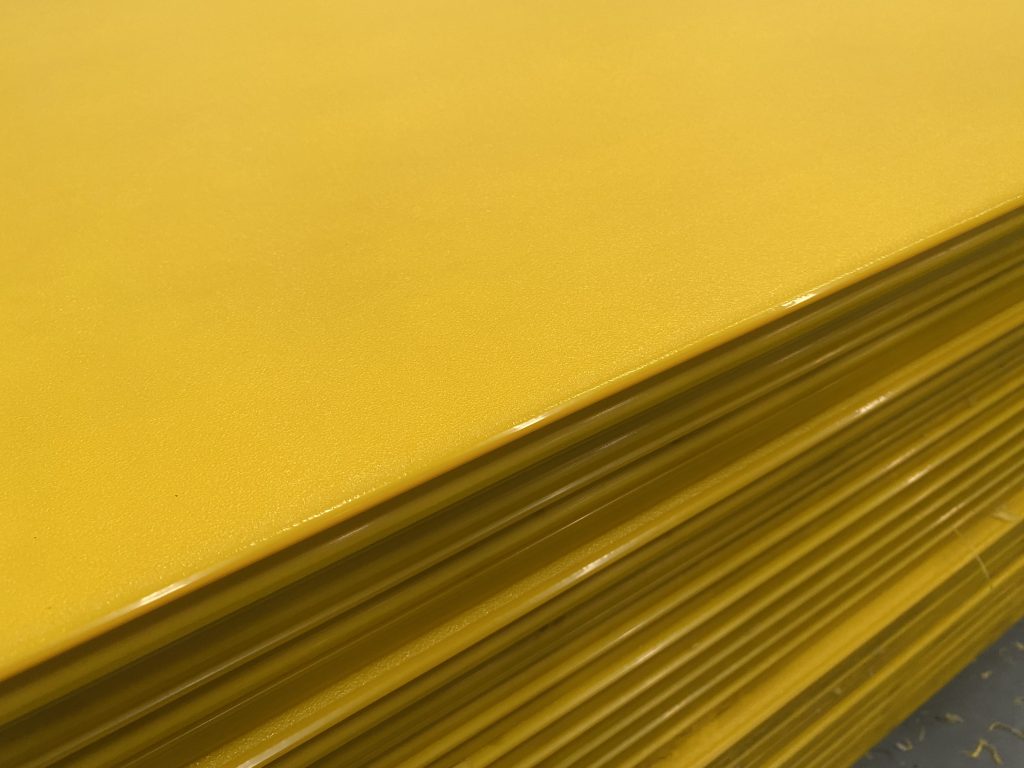
Tooling Anatomy: Why O-Flute End Mills Are Mandatory for HDPE
Standard two- or three-flute woodworking bits fail on HDPE. The flute geometry is too narrow to evacuate the long, ribbon-like chips that HDPE produces. Chips pile up, friction spikes, the thermoplastic melts, and you end up with solidified plastic fused to the bit.
A single-flute O-flute end mill solves this. Its wide, polished half-moon valley gives each chip a clear exit path. One tooth, one chip, no recutting, no heat buildup.
For thick sheets over 6 mm, choose an upcut O-flute to throw chips upward and out of the slot. For thin sheets under 6 mm, switch to a downcut or straight single-flute. The downward cutting force keeps the sheet seated against the spoilboard instead of lifting it. Always use carbide — HSS dulls too quickly on production runs and raises edge temperature fast.
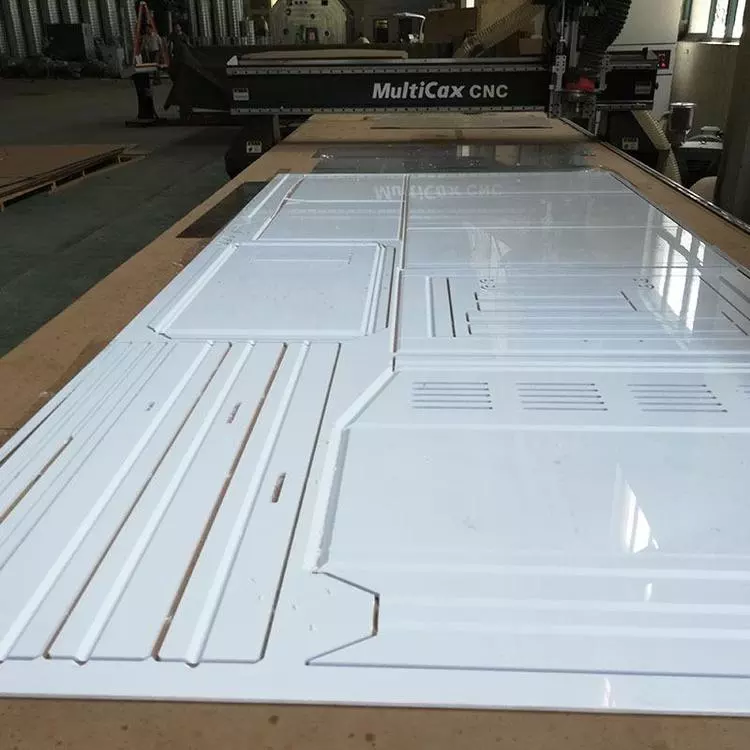
Dialing In Feeds and Speeds: The “Cold Chip” Equation
The rule for CNC cutting HDPE is simple: slow spindle, fast feed. A fast spindle with a slow feed grinds rather than cuts. Grinding generates heat. Heat melts HDPE.
Recommended parameters for a 1/4″ (6.35 mm) single-flute O-flute carbide bit:
| Parameter | Value |
| Spindle RPM | 14,000 – 18,000 |
| Feed rate | 150 – 250 IPM (3,800 – 6,300 mm/min) |
| Chip load | 0.008″ – 0.012″ (0.2 – 0.3 mm) |
| Pass depth | 1× tool diameter (max 6.35 mm per pass) |
If chips come out powdery, your feed is too slow. If they come out as melted strings, increase
feed or reduce RPM. A compressed cold air gun aimed at the bit and kerf removes heat at the source and blasts chips clear before they re-enter the cut.
Sheet Nesting, Unit Conversion & Weight Calculator Integration
Efficient nesting on 4 × 8 ft (1,220 × 2,440 mm) or 2,000 × 3,000 mm stock reduces offcut waste significantly. If your router travel envelope is smaller than the full sheet, pre-cutting with professional panel sawing cut-to-size services delivers exact modular blanks that fit your table without additional rough cuts.
When your DXF files are in imperial units and your machine controller uses metric, use the converter below to align drawing coordinates with machine pulses:
To estimate blank weight per sheet for fixture load planning and freight quotes:
For full pallet and shipping weight, the plastic sheet weight calculator handles multiple sheet counts and outputs a precise total tonnage figure.
Face Milling HDPE: Tool Geometry, Cutters, and Fly Cutting
Never use inserts designed for cast iron on HDPE. Negative-rake geometry crushes and tears the plastic instead of shearing it, leaving a fuzzy, torn surface.
Instead, choose a face mill fitted with high positive-rake inserts (15°–20°), ideally polished CCGT or APKT inserts made for aluminum. The sharp, mirror-ground edge shears the material cleanly rather than pushing it.
For large flat areas that need a mirror-like finish — think mold-trial backer plates below Ra 1.0μm — a fly cutter is often the better tool. A single-point, large-diameter fly cutter run at high surface speed with a shallow depth of cut (0.1mm to 0.25mm) removes stitch lines entirely, because one continuous sweeping edge replaces multiple overlapping insert passes.
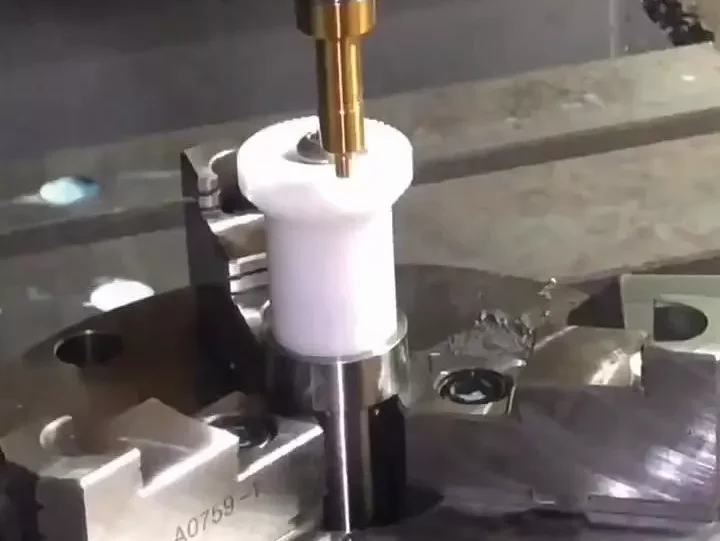
End Milling and Slotting Parameters: Feeds, Speeds, and Axial Depth
Roughing slots calls for a two-flute, large-helix end mill that clears chips fast. For finishing side walls, switch to a polished single-flute (O-flute) carbide end mill designed for plastics.
A practical VMC starting point looks like this:
Spindle speed: 6,000–12,000 RPM (roughly 300–600 m/min surface speed, depending on tool diameter)
Feed per tooth: 0.15mm–0.35mm, enough to form a continuous curled chip that carries heat away
Axial depth of cut: up to 1.5x tool diameter for roughing; leave 0.3mm on the wall for a light finishing pass
Material choice affects chatter resistance in deep pockets. Higher-toughness extruded pe100 sheet material tends to resist deflection better than standard grades under aggressive slotting, which matters when you’re cutting deep fixture cavities.
Dry Milling vs. Air Blast vs. Water Coolant
Each cooling method carries trade-offs.
Dry milling is simple, but heat builds up fast. If chips can’t escape a slot, they can re-weld inside the groove and ruin the finish.
Flood coolant solves the heat problem, but porous fixture faces can trap the emulsion. That’s a real concern if the plate later needs to stay clean for assembly or food-grade use.
The best middle ground for most shops is cold compressed air, delivered through a vortex tube at close to 0°C. It cools the cutting edge, blows long chips clear, and keeps the part completely dry. Before switching cleaning solvents or cutting fluids, it’s worth checking the plate’s compatibility using published chemical resistance test data, since some solvents can slowly affect surface stability over repeated exposure.
Workholding Without Distortion and Stock Weight Calculations
Vise clamping is the most common cause of “invisible” distortion. Squeeze an HDPE plate too hard sideways, and the top surface bows slightly upward while you’re milling it flat. Release the vise afterward, and the plate springs back — leaving a surface that’s actually concave.
Three fixes work well:
Use soft jaws to spread clamping force over a wider area
Torque clamps to a set value (under 25 Nm) with a torque wrench
Switch to perimeter clamps and locating pins instead of a vise entirely
Before cutting, converting imported drawing dimensions and estimating blank weight saves real material cost. Use the built-in converter for imperial-to-metric drawings:
And check gross plate weight before ordering stock, especially for thicknesses from 20mm to 100mm:
For a full breakdown across sheet sizes and densities, the standalone plastic sheet weight calculator page is useful for estimating pallet or container loads ahead of a large order.
Material Mechanics: Why HDPE Behaves Differently on CNC Machines
Metal-shop habits do not always transfer to plastic. HDPE’s thermal expansion coefficient is three to five times higher than aluminum’s. That means localized cutting heat can cause a small area to swell, distort, and throw off your dimensions before the part even cools.
There’s also elastic recovery to consider. Plastic has a much lower elastic modulus than metal. During drilling or milling, the material can deflect slightly under tool pressure, then spring back. The result is holes that measure smaller than the drill bit and pockets that close in slightly after cutting.
Sheet quality matters here too. Extrusion-grade stock generally holds tighter internal consistency than compression-molded sheet, which reduces warping in deep-pocket work. For thick-section parts (20mm to 100mm), low-stress extruded HDPE plates are the safer starting material.
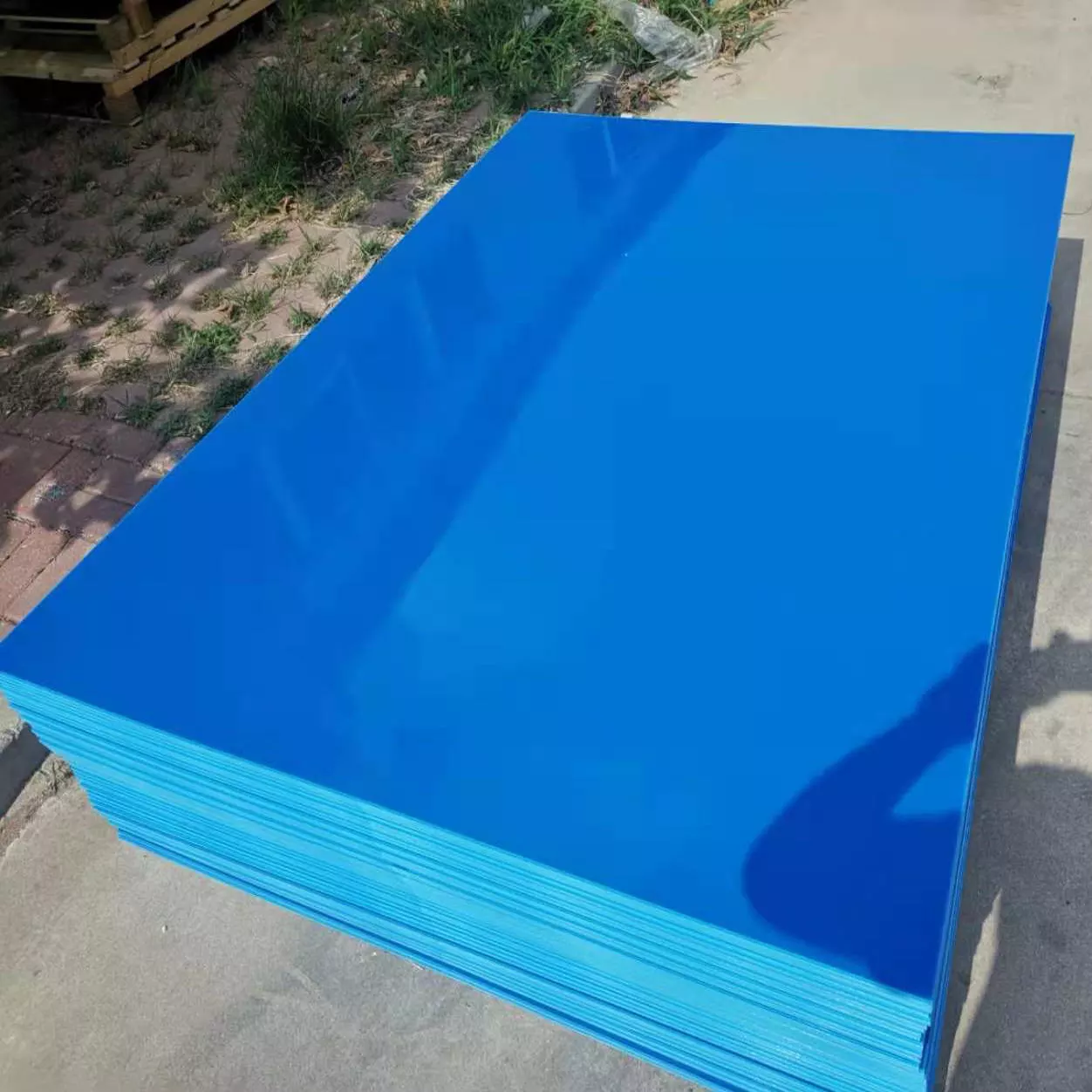
One common outcome of that process is custom cutting boards from HDPE, cut, edged and drilled to foodservice specifications.
After machining, parts that must be joined are fused with an HDPE weld rod of the same grade.
Once you have your sheet cut to size, the next step is HDPE sheet fabrication — welding, machining and forming it into a finished component.
Frequently Asked Questions
Why does my router bit keep melting HDPE and wrapping in plastic?
Your spindle RPM is too high and your feed rate is too low — the bit is rubbing rather than cutting. Drop spindle speed to 14,000 – 16,000 RPM, raise feed to 180 – 220 IPM, and switch to a single-flute O-flute end mill.
What is the difference between upcut and downcut spiral bits for HDPE?
Upcut bits eject chips upward and prevent heat buildup in deep pockets — best for sheets over 12 mm. Downcut bits press the workpiece down and prevent surface layer peeling on thin laminate sheets between 3 and 6 mm.
How do I keep small HDPE cutouts from flying off the vacuum table?
Add onion skinning (leave 0.5 mm uncut until the final pass) or set 3 – 4 small tabs per part in your CAM file. Both methods keep parts secured within the vacuum zone until the job is finished.
Can I use standard woodworking compression bits on dual-color HDPE laminate?
Standard compression bits are optimized for wood and have narrow flutes that trap heat in plastic. For thick laminate sheets, use a single-flute compression bit designed for plastics, which protects both face layers without causing chip buildup.
What is the maximum HDPE thickness I can cut in one pass?
Limit pass depth to one times the tool diameter: 6.35 mm for a 1/4″ bit and 9.5 mm for a 3/8″ bit. Cut 1″ (25.4 mm) stock in four to five stepped passes to maintain clean chip evacuation and avoid spindle deflection.
What is the recommended cutter type for face milling large HDPE fixture plates?
Use a large-diameter face mill fitted with polished, high positive-rake inserts (CCGT or APKT style, 15°–20° rake), or a single-edge fly cutter. Dull or negative-rake edges tear the surface instead of cutting it cleanly.
How can I prevent HDPE plate from bowing after milling one side?
Bowing happens because internal cooling stress is unevenly released. Mill both faces in small, equal passes (a “skin pass” of roughly 2mm per side) rather than removing all stock from one face. For precision fixtures, a low-temperature anneal (around 90°C) after roughing helps stabilize the plate further.
Can I use standard water-soluble coolant when milling HDPE plates?
Yes, and it cools well. However, HDPE’s smooth surface can trap residue in tight joints, which is a problem for cleanroom or food-contact fixtures. In those cases, cold compressed air is the cleaner choice.



