

If you have ever specified plastic for a fabrication project, you have almost certainly come across the 4×8 format. Four feet by eight feet — roughly 1220 mm × 2440 mm — is the workhorse dimension of the sheet materials industry. It matches plywood, it matches standard truck and container loading patterns, and it fits comfortably on a CNC router bed or panel saw. When that dimension is combined with polyethylene, you get one of the most versatile industrial materials available today: polyethylene sheets 4×8.
This guide explains what a 4×8 polyethylene sheet actually is, which grades and thicknesses matter, how to compare suppliers, and where these panels deliver the best return on investment.
What Exactly Is a 4×8 Polyethylene Sheet?
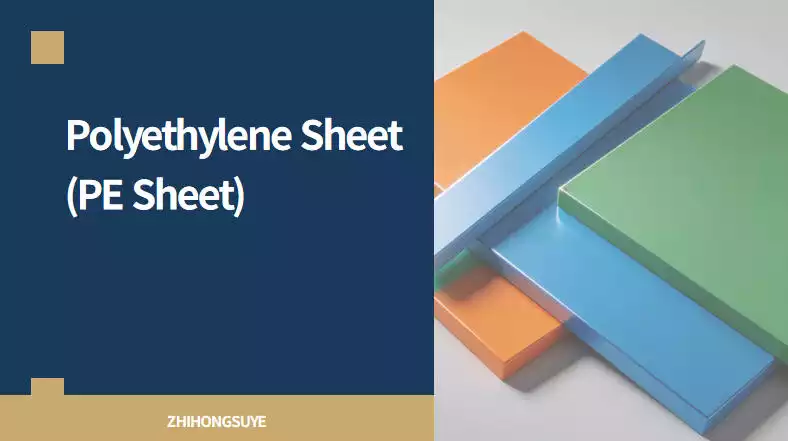
A 4×8 polyethylene sheet is a solid, extruded thermoplastic panel measuring 48 inches wide by 96 inches long. Unlike thin polyethylene film or sheeting sold on rolls, these are rigid structural boards produced by melting polyethylene resin, forcing it through a flat die, and calibrating it between polished rollers to achieve a consistent thickness and surface finish.
Three polyethylene families dominate the 4×8 market:
HDPE (high-density polyethylene) — density around 0.94–0.96 g/cm³. This is the most widely used grade. It offers excellent chemical resistance, low moisture absorption, good machinability, and a favorable price-to-performance ratio. Most general-purpose 4×8 boards you encounter are HDPE.
UHMW-PE (ultra-high molecular weight polyethylene) — molecular weights above 3 million g/mol. UHMW trades some rigidity for dramatically improved abrasion resistance and one of the lowest coefficients of friction of any solid polymer. It is the material of choice for chute liners, wear strips, and truck bed liners.
LDPE / MDPE — softer, more flexible variants used where impact absorption or formability matters more than stiffness.
Because polyethylene is chemically inert, all three grades resist acids, alkalis, salts, alcohols, and most solvents at ambient temperature. None of them rot, rust, delaminate, or absorb water — which is exactly why they have replaced plywood, steel, and coated MDF in so many applications.
Thickness Options and How to Choose
Thickness is where most buyers make expensive mistakes. A 4×8 panel is available anywhere from 1/16 inch (1.5 mm) up to 4 inches (100 mm) and beyond, and every step up adds weight and cost.
|
Nominal thickness |
Typical use |
|
1.5–3 mm |
Cladding, splash guards, thermoformed liners, signage substrate |
|
4–6 mm |
Cutting board blanks, cabinet backs, light partitions |
|
8–12 mm |
Tank baffles, marine trim, playground panels, machine guards |
|
15–25 mm |
Structural fabrication, dock bumpers, food-processing tables |
|
30–100 mm |
Fender pads, ground protection mats, heavy wear blocks, machined components |
A practical rule: polyethylene has roughly one-tenth the stiffness of aluminum, so unsupported spans need either extra thickness or a support frame. For a horizontal panel carrying moderate load over a 600 mm span, 15–19 mm HDPE is usually the sweet spot. If you are unsure how a given thickness will behave under load or how much a panel will weigh in shipping, our detailed breakdown of polyethylene sheet thickness walks through the trade-offs grade by grade.
For quick logistics math, a 4×8 HDPE panel at 12 mm thickness weighs approximately 33 kg (73 lb). Double the thickness and you double the weight — a detail that matters when a full container of 4×8 boards is being quoted on volumetric versus actual weight.
Surface Finishes That Change the Application
The same 4×8 polyethylene sheet can serve completely different markets depending on its surface treatment:
- Smooth / matte extruded finish— the default, easy to clean, suitable for food contact when produced from compliant resin.
- Sandblasted or orange-peel texture— hides scratches, reduces glare, and provides light grip. Common in marine and architectural work.
- Diamond or embossed pattern— engineered slip resistance for walkways, ramps, trailer floors, and scaffold planks.
- Color-core (two-tone)— a colored cap layer over a contrasting core, so that engraving reveals the second color. This is the standard for signage, dimensional lettering, and playground panels.
- UV-stabilized— carbon black or hindered amine light stabilizers added for multi-year outdoor exposure without embrittlement.
Color also carries functional meaning. Food processors often specify blue or white for foreign-object detection; marine fabricators lean toward gray, sand, and black; municipal playground standards frequently mandate specific bright colors with proven lightfastness.
Where 4×8 Polyethylene Sheets Are Used
Food and beverage processing. Cutting boards, conveyor guides, table tops, and wall cladding. Polyethylene will not harbor bacteria the way scored wood does, and it tolerates aggressive caustic washdowns.
Marine and dock work. Non-absorbent construction means a 4×8 PE panel used as a dock bumper, boat hatch, rod holder, or console face will never delaminate or need repainting. Fabricators cut, route, and weld it into finished components with woodworking tools.
Chemical containment. Tank liners, secondary containment walls, drip pans, and scrubber components. Polyethylene handles hypochlorite, ferric chloride, sulfuric acid, and caustic soda better than most metals.
Materials handling and mining. UHMW liners in hoppers, chutes, and truck beds eliminate material hang-up and cut wear replacement cycles by a factor of three to five compared with steel.
Construction and site protection. Thick 4×8 panels serve as temporary road mats, crane pads, and ground protection over turf and soft soil — reusable hundreds of times.
Agriculture and animal husbandry. Pen dividers, feed bunk liners, and stall panels that resist urine, manure, and pressure washing.
How to Evaluate a Supplier
Not all 4×8 polyethylene sheets are equal, even when the spec sheet looks identical. Ask these questions:
- Virgin or regrind resin?Recycled content lowers price but degrades impact strength, weld quality, and color consistency. Ask for the resin grade and MFI, not just “HDPE.”
- Thickness tolerance.Reputable extruders hold ±5% or better. Loose tolerance causes problems in CNC nesting and in welded fabrications.
- Flatness and internal stress.Poorly annealed sheet warps after machining. A quick test: rout a deep groove in an offcut and see whether the panel bows.
- True dimensions.Some mills supply “4×8” as 1200 × 2400 mm rather than 1220 × 2440 mm. That 20 mm shortfall can ruin a fitted installation.
- Food-contact declarations, RoHS/REACH statements, and UV test data should be available on request.
- Cut-to-size capability.A supplier that can slit and trim in-house saves you scrap and secondary handling.
At Hebei Zhihong Plastic Products Manufacturing Co., Ltd., we have been extruding engineering plastic panels since 2012 from our facility in the Songmen Provincial Chemical Industrial Park, Wuqiao County, Cangzhou. Our full range of HDPE plastic sheets 4×8 covers thicknesses from 1.5 mm to 100 mm in smooth, textured, and color-core constructions, with custom sizes up to 2000 mm wide available on request.
Fabrication Tips
Polyethylene machines beautifully with standard woodworking equipment, but a few habits improve results dramatically:
- Use sharp carbide tooling with high rake angles and generous chip clearance; PE gums up dull cutters.
- Run high spindle speeds with fast feed rates to keep chips clearing and avoid melting.
- Clamp panels firmly — PE flexes more than plywood and will lift into the cutter.
- Never glue. Polyethylene’s low surface energy defeats almost all adhesives. Join by hot-air or extrusion welding, or use mechanical fasteners with oversized holes to allow thermal movement.
- Allow for expansion: PE moves roughly 0.15–0.20 mm per meter per °C, about ten times more than steel.
Estimating Cost and Weight Before You Order
Because polyethylene is priced by weight in most global markets, the real cost driver is not the panel count but the total kilograms. A 25 mm 4×8 board contains twice the resin of a 12 mm board and will be priced accordingly. Before requesting a quote, it pays to calculate your total material volume so you can compare offers on a per-kilogram basis. Our free plastic sheet weight calculator converts sheet dimensions and thickness into weight for HDPE, PP, UHMW, and other grades in seconds.
For supplier pricing and what to expect per sheet, read our how much HDPE sheets cost overview.
Deep-Dive Technical Notes
HDPE Sheet Supplier Tips To Choose The Most Suitable HDPE Sheet For Your Projects
What are HDPE Sheets' Benefits?
Due to its durability and versatility, HDPE sheets are used for many applications. Long-lasting performance in harsh conditions is guaranteed by their impact, chemical, and UV resistance. The lightweight, sturdy HDPE plastic sheets are ideal for construction, agriculture, and industry. HDPE board and panels can be designed and installed to meet project needs. Their exceptional temperature resistance improves their reliability, especially in outdoor and heavy-duty applications. HDPE sheets have environmental benefits as well as utilitarian ones. Polyethylene plastic sheets are recyclable. This makes them perfect for green projects. Choosing between HDPE board and panels relies on the usage. HDPE panels cover more surface area, while HDPE boards are better for structural and load-bearing applications. Both options are affordable and high-quality.
What Are Common HDPE Sheet Uses?
HDPE sheets are flexible for construction, agriculture, and industrial operations. Construction uses them for protective barriers, ground stability, and waterproofing. Agriculture uses HDPE plastic sheets to line ponds, silos, and irrigation systems for durability and chemical resistance. Due to their robustness and lightweight, industrial applications use HDPE panels and polyethylene boards for machine parts, chemical storage tanks, and impact-resistant surfaces. HDPE sheets can suit many project needs, as shown in these applications. Beyond functioning, HDPE plastic sheets have other benefits. In tough outdoor conditions, their UV, moisture, and chemical resistance provides long-term performance. HDPE boards and polyethylene plastic sheet are both flexible and easy to mount. Recycling HDPE panels saves money and promotes sustainability. For heavy-duty industrial or lightweight agricultural operations, HDPE sheets are durable and effective.
How to Verify Supplier HDPE Sheet Quality?
Ensuring supplier HDPE sheet quality needs a detailed study of critical parameters. Start by checking the material for uniform thickness, smooth surfaces, and consistent color. Check for HDPE sheet certificates that verify quality and industry requirements. Request technical specs and test reports to ensure the sheets fulfill project requirements. Reliable HDPE sheet suppliers provide extensive product documentation to assist you decide. Ask HDPE sheet suppliers specific questions to assess reliability. Ask about quality control, production, and HDPE plastic sheet options. And ask for testing samples and experience with similar tasks.
How to Choose an HDPE Sheet Supplier?
To find the best HDPE sheet supplier for your project, consider various things. Your first priority should be quality HDPE sheets for durability and long-term performance. Delivery dates and customer service can greatly effect project progress, thus reliability is important. Customer reviews assist you choose a supplier by revealing their reputation and service quality. Comparing several providers lets you compare polyethylene sheet price and product diversity to find the best deal. Compare HDPE sheet vendors by certification and industry standards. Certified HDPE sheet producers prove quality and compliance. Examine their HDPE plastic sheets, polyethylene boards, and HDPE panels to guarantee they fit your needs. Ask about their quality control measures to ensure product consistency. Zhihong Plastic is committed to providing high-quality PP sheets that meet your project needs. Our PP sheets are durable, versatile, and available in various specifications to suit different applications. With years of expertise and a focus on innovation, we ensure reliable products and excellent customer service. Whether you need PP sheets for construction, industrial use, or custom projects, we are here to support you.
HDPE Sheet Manufacturers And Industry Standards
What Are HDPE Sheets Used For?
Industrial, building, and packaging industries use HDPE sheet manufacturers' flexible solutions. Durable and chemical-resistant HDPE sheets are perfect for equipment linings and storage tanks in industry. They provide protective barriers, ground stabilization, and waterproofing in construction. Lightweight and strong HDPE sheets ensure safe packaging and shipping. Industrial HDPE sheet suppliers and HDPE sheet manufacturers for construction use offer UV-resistant and food-grade alternatives. Customization makes HDPE sheets more useful. Businesses may cut HDPE sheet to precise proportions. Custom thickness HDPE sheet supplier enable accurate production for applications requiring specified thicknesses, such as HDPE sheet 10mm. Additionally, HDPE sheet fabricators and HDPE sheet processing companies help create custom designs and finishes. Industrial and construction HDPE sheet manufacturers follow industry standards to deliver high-quality, reliable solutions that fulfill different needs.
How Are HDPE Sheets Made?
HDPE sheet producers use modern methods to provide high-quality sheets for many industries. After selecting high-density polyethylene resin, it is melted and extruded into homogeneous sheets. After cooling, the sheets are cut to size. For constant thickness and durability, HDPE sheet manufacturers use accuracy. HDPE sheet processing companies improve UV resistance and chemical stability for building. Custom HDPE sheet manufacturers can supply project-specific solutions. To suit special requirements, they provide solutions like HDPE sheet cut to size and custom thicknesses. These manufacturers work with HDPE sheet fabricators to create custom designs and finishes for clients. Also, high-quality HDPE sheet production companies use innovative technology to fulfill industry standards. This improves product reliability and meets market demand for sustainable and recyclable materials.
What Are HDPE Sheet Benefits?
HDPE sheet manufacturers offer durable materials for sectors that need long-lasting solutions. The sheets' durability, chemical resistance, and high weather resistance ensure consistent performance in difficult circumstances. UV-resistant HDPE sheet producers improve the material's sun resistance. Since recycled HDPE sheet manufacturers reuse materials to reduce waste and preserve quality, they are environmentally friendly. Businesses that value sustainability and reliability select HDPE sheets. Specialized vendors allow organizations to get customized solutions. Food processing and storage sectors use food-grade HDPE sheet suppliers. Cheap HDPE sheet suppliers near me allow organizations to get high-quality sheets on a budget. To satisfy special project needs, custom HDPE sheet manufacturers also provide solutions like HDPE sheet cut to size and specified thicknesses, such 10mm. These benefits, combined with the material's inherent qualities, make HDPE sheets a versatile and practical alternative for many sectors.
What HDPE Sheet Thicknesses Are Available?
HDPE sheet manufacturers offer many thicknesses to fulfill industry needs. In applications that require strength, HDPE sheet 10mm is commonly used. Precision and efficiency are guaranteed by custom thickness HDPE sheet suppliers for projects with precise dimensions. These thickness options let firms choose the best one for industrial, construction, or packaging needs. Having HDPE sheet cut to size alternatives also improves project outcomes and reduces material waste. In order to meet particular thickness criteria, HDPE sheet fabricators are necessary. To supply sheets that meet project standards, these fabricators collaborate closely with HDPE sheet processing companies. They maintain quality and uniformity across thicknesses using innovative machinery and methods. In order to preserve dependability and performance, HDPE sheet production companies follow industry standards. With precision manufacture and customization, HDPE sheets are a versatile option for organizations seeking high-quality materials adapted to their needs.
HDPE sheets: eco-friendly?
By using recycled resources, HDPE sheet producers help the environment. Recycled HDPE sheet manufacturers use post-consumer and industrial waste to reduce virgin resource use. This method saves energy, raw resources, and landfill garbage. High-density polyethylene sheet suppliers are more sustainable because their products endure longer and require fewer replacements. These activities support worldwide eco-friendly industry strategies. HDPE sheets have environmental benefits beyond recycling. Chemical and weather resistance extends the material's lifespan. To reduce pollution and energy use, HDPE sheet production companies use innovative manufacturing methods. Custom HDPE sheet manufacturers also contribute by offering bespoke solutions, such as HDPE sheet cut to size. For organizations seeking sustainable materials, HDPE sheets are an environmentally friendly solution thanks to manufacturers and suppliers.
HDPE Sheet Manufacturer Standards
HDPE sheet producers follow strict industry requirements and certifications to produce high-quality products. ISO certifications ensure manufacturing uniformity and product quality. To satisfy the needs of sectors demanding durable and reliable products, high-density polyethylene sheet suppliers and HDPE sheet production companies prioritize these certifications. To ensure their products meet safety and performance standards for specialized applications, UV-resistant HDPE sheet manufacturers and food-grade HDPE sheet supplier also adhere to strict criteria. For HDPE sheet wholesale suppliers and exporters, compliance with industry standards is important. Globally credible providers must ensure their products meet international quality standards. Using these standards, HDPE sheet distributors and exporters may deliver consistent and reliable goods. Custom HDPE sheet manufacturers and fabricators meet project requirements while adhering to norms. This quality and industry standard dedication assures organizations receive supplies that meet their exact specifications and performance expectations.
How to Find Reliable HDPE Sheet Manufacturers?
Reputation, product quality, and industry standards are important to finding credible HDPE sheet manufacturers. Start by reading reviews of top HDPE sheet manufacturers to learn about their products and customer satisfaction. The capacity to offer custom solutions, such as HDPE sheet cut to size and custom thickness options, is another factor to consider. High-quality HDPE sheet manufacturers have certifications and strong quality control systems to ensure product performance. HDPE sheet wholesale suppliers and distributors who offer bulk purchasing alternatives can help businesses save money. These vendors offer affordable prices without sacrificing quality. Businesses may also pick HDPE sheet exporters with a track record of on-time delivery and international standards. Businesses can choose trustworthy manufacturers and suppliers that meet their needs and budget by concentrating on these characteristics. When selecting an HDPE sheet manufacturer, professionalism and reliability are paramount. As a company specializing in high-performance extruded engineering plastic products, Zhihong Plastic stands out in the industry through advanced technology, stringent quality control, and a deep knowing of industry standards. We are committed to providing customized, durable, and eco-friendly HDPE sheet solutions to meet diverse needs. Choose us for the assurance of expertise and quality.



