

HDPE sheets are used in many sectors, but how are they made? The versatile HDPE sheet extrusion method is the answer. This technology provides better quality control than other plastic manufacturing methods. We’ll go over every step of the process, from HDPE sheet extrusion die design and screw selection to roll calibration for a flawless surface. Zhihong Plastic will also look at how melt flow index and crystallinity control affect chemical resistance and dual-layer, UV-stabilized, and food-grade application sheets.

How is HDPE Sheet Extruded? Breakdown by Step
1. Material Preparation/Feeding
Raw materials are prepared for HDPE sheet extrusion. Our high-quality HDPE resin pellets are first dried to remove moisture. Final product flaws might result from moisture. After that, we add colorants or UV stabilizers for specialized applications.
The system receives mixed material after preparation. At the extruder’s start, a big hopper holds resin and additives. Gravity pours material into the extruder’s barrel from the hopper.
2. Melting, Transporting
External heaters melt HDPE pellets in the extruder barrel. Meanwhile, a big revolving screw moves the material. The shape of the HDPE sheet extrusion screw generates frictional heat and pressure to evenly melt the resin.
The barrel features temperature zones to control this stage. Operators control these zones to avoid overheating and material damage. Properly controlled temperatures are needed to achieve the correct HDPE sheet extrusion melt flow index.
3. Sheet Shaping
Plastic is pressed through a shaping tool once melted. Die design is important since it determines sheet width and thickness. Different die designs allow for a variety of product dimensions to satisfy customer needs.
Operators can then fine-tune the die. Changes to the die gap guarantee that molten plastic flows evenly across its breadth. This step is necessary for a uniform sheet thickness and no weak places.
4. Cooling/Solidification
Hot, flexible sheet exits die and immediately travels through three big, cooled rollers, called three-roll stack or chill rolls. The material solidifies into sheets as this stack quickly cools it. These rolls need precise temperature control.
Proper roll calibration ensures a smooth surface finish and accurate end thickness. Cooling rate management is also important. Effective HDPE sheet extrusion crystallinity management assures strength and stability by affecting molecular structure.
5. Finishing/QC
Ends with continuous sheet finishing. Sharp blades cut sheet edges for straight, clean sides and precise breadth. Trimmed trash is often recycled back into the process.
The sheet is cut to length or twisted into huge rolls after trimming. Quality control teams undertake final checks throughout. They inspect the product for surface faults, dimensional accuracy, and integrity to fulfill standards.
Key HDPE Sheet Extrusion Quality Factors
1. Material Qualities
Raw material determines project quality. Particularly important is the HDPE sheet extrusion melt flow index (MFI). It shows the resin’s viscosity at a specific temperature.
Resin quality and uniformity are as important as MFI. Gels or weak patches in the completed sheet might result from contaminants or batch variations. Thus, high-quality, consistent resin is necessary for predictable and successful manufacturing.
2. Process Settings
In HDPE sheet extrusion, operators must carefully monitor numerous process parameters. For instance, screw speed affects melt temperature and production output. High speeds boost productivity but generate frictional heat, thus quality requires a balance.
Furthermore, accurate melt temperature control reduces material degradation. Roller pulling speed is also important. It affects sheet thickness and molecule orientation.
3. Maintenance and Design of Equipment
Manufacturing equipment condition greatly affects product quality. Worn screws, barrels, and dies can affect material flow and pressure. Thus, thickness fluctuations and poor HDPE sheet extrusion surface finishes might undermine the operation.
For high-quality HDPE sheet extrusion, calibration and maintenance are necessary. Correct HDPE sheet extrusion roll calibration provides proper thickness, while regular screw design and die checks prevent flaws. Production of high-quality sheets depends on well-maintained gear.
HDPE Sheet Extrusion Benefits Over Others
1. In comparison to other plastic manufacturing methods
Over injection or blow molding, HDPE sheet extrusion produces continuous, flat profiles more efficiently. Extrusion is better for continuous, uniform sheet, panel, and film production than molding.
This makes this process cost-effective, especially for high-volume manufacturing runs that require consistency. Die tooling is simpler and cheaper than injection molding molds. This makes mass flat stock production cheaper.
Additionally, HDPE sheet extrusion provides better product dimension control. Process control lets operators accurately control thickness and surface uniformity. Tight tolerances are achieved by fine-tuning the HDPE sheet extrusion die design and roll calibration.
This precision is harder to accomplish over big, flat surfaces with other approaches. The continuous nature of extrusion reduces cycle-based process variability. Thus, it ensures smooth HDPE sheet extrusion surface finish and dimensional correctness throughout manufacturing.
2. Key HDPE Sheet Extrusion Benefits
The high output and production speed of HDPE sheet extrusion are important benefits. Since the machine operates continually, it may produce a lot of material quickly. High-demand industries benefit from its production solution.
Efficiency means faster project completion and shorter client lead times. Its 24/7 uninterrupted production maximizes productivity and makes it ideal for large-scale applications that require speed and volume.
Additionally, the method is quite versatile. Sheets can range from thin films to large. The same production line can make products of varied sizes and thicknesses by altering the die and downstream equipment.
The versatility permits substantial customization to meet end-use needs. HDPE sheet extrusion can be adjusted to produce a thin, flexible liner or a thick structural panel.
HDPE Extruded Sheet Uses
The versatility of HDPE sheet extrusion leads to several frequent applications. Extruded HDPE is popular in many industries due to its durability, chemical resistance, and ease of production. Heavy-duty industrial and specialty consumer products applications are numerous.
1. Construction, Industry
HDPE sheets are valued in tough industrial and construction settings. For tanks, ponds, and landfills, their chemical resistance makes them ideal primary or secondary containment liners. The environment and infrastructure are protected by safe substance containment without material deterioration.
These sheets are strong and rigid. Chemical-resistant containers, industrial partitions, and protective barriers are made with them. The simplicity of cutting.
2. Expert Applications
Additives can be added to HDPE sheet extrusion to meet strict regulatory criteria. HDPE sheet extrusion for food-grade applications yields FDA-approved direct food contact material. Commercial cutting boards and food processing components use this material.
Also, companies can improve the material for outdoor use. UV-stabilized HDPE sheet extrusion uses sun-protective chemicals. Therefore, this material is ideal for making durable outdoor playground equipment, marine building parts, and outdoor cabinetry.
Composite materials can be made using modern methods. Co-extrusion combines two layers of HDPE with various colors or textures for dual-layer sheet extrusion. This is popular for signs, maritime components, and other attractive and functional products.
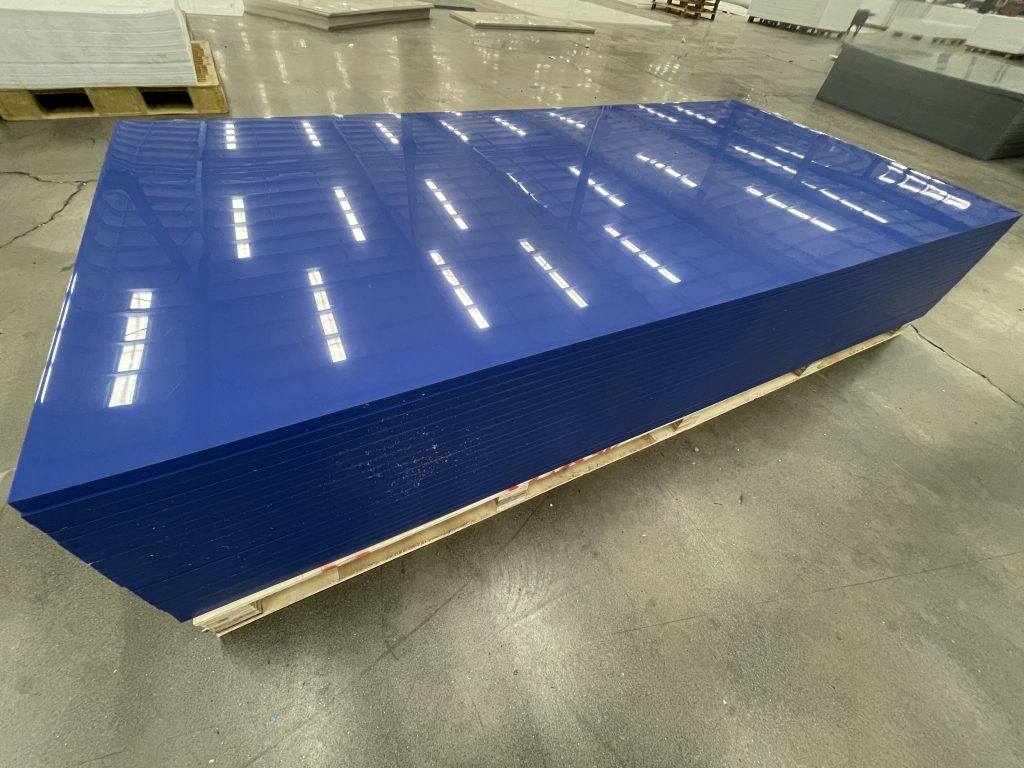
At Zhihong Plastic, we pride ourselves on our advanced technology, rigorous quality control, and commitment to excellence. With over a decade of experience, we have become a trusted leader in the industry, offering tailored solutions to meet diverse needs. Choose Zhihong for your HDPE sheet supplier. Let us help you achieve your goals with our professional expertise and cutting-edge capabilities.
Before you order, check our HDPE sheet price comparison to see how specifications affect cost.
Deep-Dive Technical Notes
Welding HDPE Sheets from Zhihong
Joint Preparation: The "Golden Rule" of Removing Oxidation
Proper groove geometry controls heat distribution and filler volume. For sheets 3-6 mm thick, machine a single-V groove at 60°-70° with a 1 mm root face. For sheets 8 mm and above , a double-V (X-groove) configuration reduces angular distortion and residual stress by distributing weld passes symmetrically across both faces. Beyond geometry, oxide layer removal is non-negotiable. Polyethylene left open to air develops an invisible oxidation film within hours. That film blocks molecular chain entanglement across the weld interface, producing a bond that looks solid but fails under hydraulic pressure. The rule under DVS 2209 is straightforward: scrape the groove surface and a 10 mm band on each side to a depth of 0.15-0.20 mm within 20 minutes of welding . Use a sharp carbide-tipped hand scraper or a motorized rotary planer. Never use sandpaper or grinding discs. Abrasive grit embedded in the freshly exposed HDPE surface creates micro-pores that defeat spark testing and invite long-term leaks.
For a step-by-step look at turning extruded sheet into parts, our HDPE fabrication process guide covers welding, machining, thermoforming and bending.
Welding HDPE Sheets: Hot Gas vs. Extrusion vs. Butt Fusion
Hot gas / speed nozzle welding suits thin sheets (2-5 mm) and tight-corner repairs. A 3 mm or 4 mm triangular HDPE welding rod feeds through a speed nozzle while hot air heats both rod and groove simultaneously. Output is limited, but the technique gives a fabricator access to seams that no extrusion gun can reach. Handheld extrusion welding is the industrial standard for sheets thicker than 6 mm and for all structural tank assemblies. The gun runs a dual heating system: a front-mounted hot air nozzle preheats the scraped groove to 260°C-280°C , bringing the parent material to a tacky, viscous-flow state, while a separate barrel independently plasticizes the HDPE filler rod at 200°C-230°C . A PTFE-coated welding shoe then presses the molten bead into the groove with consistent compaction force, consolidating the weld pool and expelling any trapped gas. This combination of controlled preheat, independent melt temperature, and mechanically applied pressure is why extrusion welding is used to fabricate welded electroplating tank liners , assemblies that must maintain hermetic seals when immersed continuously in sulfuric acid or nickel-plating baths. Hot plate butt fusion joins sheet edges and pipe sections end-to-end. Both faces are held against a heated platen until they reach melt temperature, then the platen is removed and the faces are pressed together under controlled pressure. This method produces the most uniform cross-section weld and is preferred for large-diameter pressure vessels and pipe loops.
Critical Parameters: Temperature, Pressure, and Speed
Getting the numbers right separates a 20-year seam from a warranty claim. Parameter Recommended Range Hot air preheat (nozzle outlet) 280°C – 320°C Extrusion barrel melt temperature 210°C – 230°C Welding travel speed 15 – 30 cm/min Cooling method Natural air – no forced cooling Overheating beyond 240°C in the barrel causes thermal degradation: the HDPE yellows, emits dark smoke, and loses tensile strength in the deposited bead. Under-heating below 200°C produces an incompletely plasticized rod that creates cold-lap inclusions. Cooling discipline is equally important. Never quench a fresh weld with water or a compressed air gun. Rapid surface cooling locks in differential crystallisation between the weld bead and the surrounding parent material, generating internal tensile stress that can crack the seam days after fabrication. Natural air cooling at ambient temperature is mandatory. This practice is especially critical in demanding chemical processing applications , where seams must endure continuous thermal cycling and prolonged immersion in aggressive media over a 15-to-20-year service life.
Structural Sizing, Tank Calculations & Weight Calculator Integration
Welding HDPE into a structural vessel is not purely a joining task – it is a structural engineering exercise. The hydrostatic pressure from a full liquid column imposes shear loads on the bottom circumferential weld seam. Horizontal stiffeners must be spaced to keep panel deflection within L/100 of the unsupported span. A weld joint efficiency factor of 0.80 (per DVS 2207) is applied to all seam stress calculations, meaning the design tensile strength of a welded joint is taken as 80% of the parent sheet value. Before lifting a fabricated tank into position, the installation contractor must also know the total dead weight of the assembly. Use the unit conversion tool below to reconcile imperial gallon capacity and nominal pipe diameter with metric plate thickness dimensions:
Non-Destructive Testing (NDT) & Special Safety Environments
Every production weld on a sealed vessel must pass NDT before the tank enters service. High-frequency spark testing is the baseline method. A probe energised at 15-25 kV is drawn along the weld bead at a steady pace. Any void or pinhole instantly generates a visible blue arc and audible alarm. The probe voltage is selected based on sheet thickness – approximately 1 kV per 0.1 mm of sheet. Spark testing detects porosity and cold-lap defects that visual inspection misses entirely. Phased-array ultrasonic testing (PAUT) and vacuum box testing supplement spark testing for critical vessels where a single leak event carries significant environmental or production cost. Certain environments impose an additional requirement: fire resistance. Chemical fume extraction ducts, enclosed battery storage cabinets, and hazardous goods warehouses often carry UL 94 or EN 13501 fire-rating obligations. In those installations, standard HDPE cannot be used. Specify fire retardant polyethylene panels instead, which carry a documented limiting oxygen index and self-extinguish after ignition source removal. A finished HDPE vessel is only as reliable as the three decisions made before the first bead is deposited: choosing consistent sheet stock, scraping the oxide layer correctly, and dialling in the right temperature and travel speed for the chosen welding method. Fabricators who control all three variables consistently produce seams that achieve 85-95% of parent material tensile strength and deliver leak-free service for decades. Contact Zhihong to source matched-MFI virgin sheet and same-base-resin extrusion welding rod for your next tank fabrication project.
Q1: What is the correct temperature for extrusion welding HDPE sheets?
Set the hot air preheat nozzle to 280°C-320°C to bring the scraped groove surface to a viscous-flow state quickly. The extrusion barrel that plasticises the filler rod should run at 210°C-230°C . Temperatures above 240°C in the barrel thermally degrade HDPE, turning the deposited bead yellow and brittle. Temperatures below 200°C leave the rod incompletely melted, creating cold-lap inclusions that fail under pressure testing.
Q2: Why do welded HDPE joints crack or delaminate under pressure?
The most common cause is an unremoved oxide layer on the groove surface. The oxidation film prevents molecular chain entanglement across the bond line, so the joint peels under load despite looking visually acceptable. The second cause is a large mismatch in melt flow index (MFI) between sheets from different production batches or suppliers, mismatched MFI means the two materials reach optimum flow at different temperatures, leaving an incompatible interface. Rapid post-weld cooling is the third cause, generating internal stress that cracks the seam days after fabrication.
Q3: Can you weld HDPE sheets to polypropylene (PP) or other plastics?
No. HDPE and PP are non-polar polyolefins with different molecular architectures. Their melts are thermodynamically incompatible and do not form entangled molecular bonds across the interface on cooling. The apparent joint peels apart under minimal hand force. The only reliable way to connect HDPE fabrications to PP components is mechanical fastening – flanged connections with EPDM gaskets.
Q4: How thick should the scraped layer be before welding HDPE?
Standards require a scrape depth of 0.15-0.20 mm , sufficient to remove the entire oxidation-affected surface layer and expose bright, unaged base material. Use a sharp carbide hand scraper or motorized planer. Do not use an angle grinder with a sanding disc. Grit particles will embed into the soft HDPE surface. This compromises the gas-tightness of the weld seam. It also causes false arc discharge during subsequent spark testing.
Q5: What is the weld joint efficiency factor for HDPE fabrication?
Per DVS 2207, certified welders with calibrated equipment achieve a short-term tensile factor of 0.85-0.95. This result requires properly prepared grooves and correct extrusion methods. For long-term pressure vessel design, engineers apply a conservative 0.80 factor. This limits allowable seam stress to 80% of the parent material's tensile strength.
The same extrusion line, run with virgin resin, produces food grade polyethylene for food-contact sheet.
The same extrusion line also produces round and triangular HDPE welding rod for joining finished sheet into tanks and ductwork.
Once the sheet is extruded and cooled, many fabricators move on to secondary processing — if you plan to thermoform HDPE sheet into formed parts, see our dedicated forming guide.



