

A 4×8 ground protection mat is the standard size on job sites across North America, Europe, and Southeast Asia. The panel measures 4 feet by 8 feet, or roughly 1220 mm by 2440 mm. That footprint fits on a pallet, slides into a pickup bed, and lines up edge to edge to form a temporary road. Two workers can move most sizes by hand. That mix of coverage and portability is why the 4×8 format became the default.
Below is a practical look at how these mats work, what specs matter, and how to choose the right board for your site.
What a 4×8 Ground Protection Mat Does on Site
The mat spreads weight. A tracked excavator or a boom lift puts heavy pressure on a small contact area. Soft ground gives way, ruts form, and turf or pavement gets destroyed. A mat takes that same load and spreads it over 32 square feet. Ground pressure drops sharply. The machine stays level and the surface underneath survives.
That single function solves several site problems at once. Crews avoid getting stuck. Lawns, sports fields, and paved driveways stay intact. Restoration bills shrink. Utility contractors, tree services, event companies, and pipeline crews all rely on these mats for the same reason.
Why HDPE Is the Material of Choice
HDPE also stays workable in cold weather. The resin keeps its impact strength well below freezing, so mats do not crack when a loader drops one on frozen ground in January. On the other end, service temperatures reach about 80°C without softening.
Recycled HDPE is common in mat production and works well. Virgin resin gives brighter color and slightly better consistency. Either way, the base material is the same family of high density polyethylene sheets used for liners, wear strips, and tank walls. Ground mats are simply thicker, textured, and built for abuse.
Thickness and Load Capacity
Thickness drives both strength and price. These are the common options in a 4×8 panel:
1/2 inch (12.7 mm). Light duty. Good for foot traffic, pedestrian walkways, small utility vehicles, and event flooring on firm turf. Weighs about 79 lb per sheet.
5/8 inch (16 mm). A middle grade. Handles skid steers, small lifts, and light trucks.
3/4 inch (19 mm). The most popular working thickness. Supports rubber-tracked excavators, bucket trucks, drill rigs, and loaded dump trucks over reasonable subgrade. Around 118 lb per sheet.
1 inch (25.4 mm) and up. Heavy duty. Chosen for cranes, large tracked machines, and repeated crossings on soft or wet ground. About 158 lb per sheet.
Published load figures for HDPE mats often reach 80 tons or more. Treat those numbers with care. Capacity always depends on what sits under the mat. Firm compacted gravel supports far more than saturated clay. On very soft ground, contractors either double-stack mats or move up to thicker composite boards. When ground conditions are bad, more mats are usually better than a thicker single layer.
Surface Texture and Grip
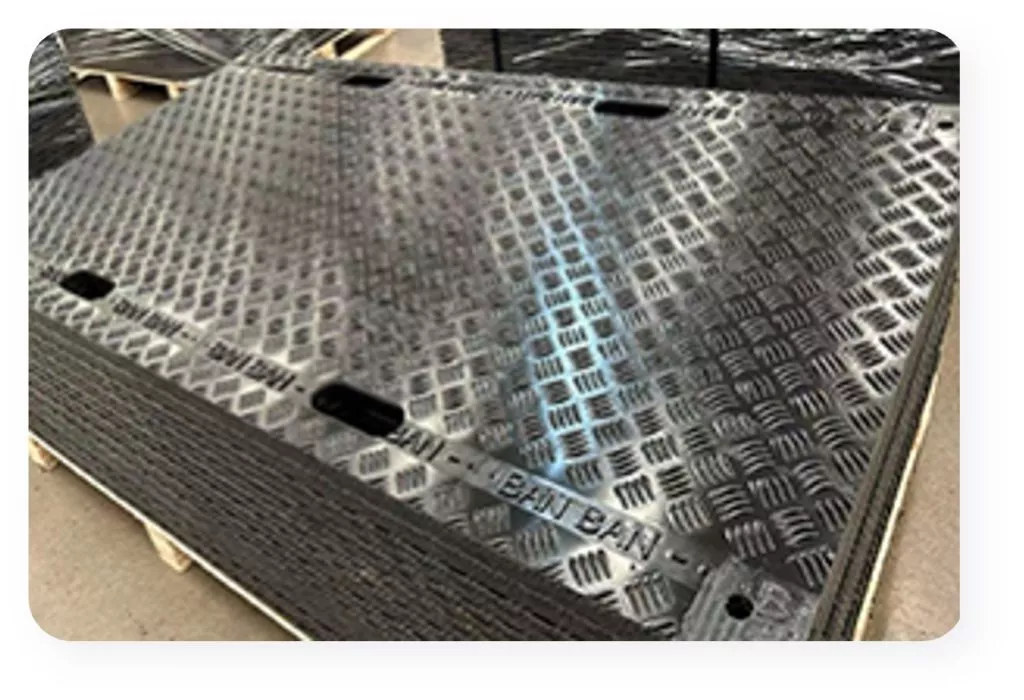
A smooth HDPE plate becomes slick when wet. That is why almost every mat carries a molded or pressed pattern on both faces. Diamond, pyramid, hexagon, and knuckle patterns are all in use. They bite into soil on the bottom face and give tires and boots traction on the top face.
Two-sided texture doubles the working life. Flip the mat when one face wears down. An HDPE anti-slip road mat with deep pyramid embossing performs noticeably better on slopes and in mud than a lightly textured board.
Hand holes matter too. Most mats include four to eight cut or molded holes around the perimeter. Crews use them for carrying, for hooking a strap, and for pinning mats together with connector plates or bolts. Without them, a wet 3/4 inch mat is awkward to lift.
Weight and Site Handling
Weight is a trade-off. Heavier mats resist sliding and carry more load. Lighter mats move faster. A two-man crew can lay a 100-foot temporary road in under an hour with 1/2 inch or 5/8 inch panels. Once you pass 150 lb per sheet, you generally want a machine with a strap or a mat-grab attachment.
For planning purposes, HDPE has a density near 0.95 g/cm³. Multiply length by width by thickness, then by that figure, and you get sheet weight. That math also tells you how many mats a flatbed can legally carry.
Skip the manual maths. The section above spells out the formula, but you do not have to run it by hand: the HDPE sheet weight calculator returns the weight of a 4×8 mat at any thickness, plus the total load for the number of mats you are moving.
Common Uses for HDPE Mats
The list of high density polyethylene uses in ground protection keeps growing. Typical applications include:
- Temporary access roads for utility and telecom work
- Crane pads and outrigger support surfaces
- Lawn and turf protection during landscaping or tree removal
- Golf course cart paths and maintenance routes
- Concert, festival, and wedding flooring over grass
- Drill rig platforms and pipeline right-of-way matting
- Livestock alleys, barn floors, and stall liners
- Wetland and marsh crossings on smaller projects
The same sheet material appears in truck bed liners, chute liners, marine boards, and dock bumpers. That range shows how well the polymer handles wear and moisture.
HDPE Mats Compared With Plywood and Steel
Plywood is cheap up front. It also soaks up water, delaminates after a few wet cycles, and often gets thrown away after one job. Cost per use ends up higher than it looks.
Steel plate carries enormous load but weighs several hundred pounds per panel. It needs equipment to place, rusts over time, and turns into a skating rink when wet.
HDPE sits between the two. A mat costs more than a sheet of plywood but lasts for years across dozens of jobs. It washes clean with a pressure washer. It stays flexible enough to conform to uneven ground instead of rocking on high spots. For most contractors, the cost per deployment is the lowest of the three options.
How to Pick the Right Spec
Start with the heaviest machine that will cross the mat. Note its weight and whether it runs on tires or tracks. Then look at the ground. Dry compacted soil is forgiving. Saturated topsoil is not.
Next, decide how the mats will be moved. Hand-carried work points to thinner panels. Machine-placed work opens up thicker options.
Check the color and UV package. Black mats with carbon black hold up best under long sun exposure. Colored mats look better at public events and show dirt less on turf.
Finally, confirm the tolerance on thickness. A quality ground protection mats 4×8 panel holds thickness within a tight band across the full sheet. Uneven boards rock under load and wear unevenly.
Care and Storage
Rinse mats before stacking. Grit trapped between panels grinds the surface texture down. Stack flat on level ground, not leaning against a wall, since long-term leaning can bow the sheet. Keep stacks out of direct sun in hot climates if the mats sit unused for months.
Cut edges can be trimmed with a circular saw and a carbide blade. Drilling extra hand holes is simple. Minor gouges do not affect performance. When a mat finally reaches the end of its life, the material is recyclable, which appeals to clients tracking waste on green building projects.
Buying From a Sheet Manufacturer
Buying direct from an extrusion plant gives you control over thickness, sheet size, color, and texture depth. A high density polyethylene HDPE sheet producer can run non-standard sizes such as 5×10 or 4×10 for wider tracks, add anti-static or flame retardant additives, and supply matching wear strips or connector hardware from the same batch.
First, request material data covering density, tensile strength, and impact resistance. Next, inquire about the manufacturer’s resin source. Furthermore, demand clear photos showing the texture roll. Those three answers tell you most of what you need to know about a supplier before you commit to a container load.
Core Materials Behind the Strength
Manufacturers build these trackway panels from extremely strong materials. High-density polyethylene forms the solid core structure. Therefore, the mats support massive weight loads easily. For example, a standard board carries over eighty tons without cracking or breaking. You can view our HDPE Plate High Density Polyethylene Plate to see this base material quality.

Meanwhile, this dense plastic repels water completely. Consequently, thick mud does not stick to the surface permanently. Clean-up takes just a few quick minutes with a standard pressure washer. Furthermore, the plastic never rots like traditional timber boards do over time. As a result, you get a clean and reliable product for every new project.
High Visibility Options Prevent Accidents
Job sites often operate at all hours of the night. Dark shifts require perfectly clear physical boundaries. Traditional black mats blend into the darkness very easily. Therefore, tired drivers might steer off the safe path. You can prevent these accidents with high-visibility products. For instance, our Dual-color HDPE Sheet provides a bright visual contrast.
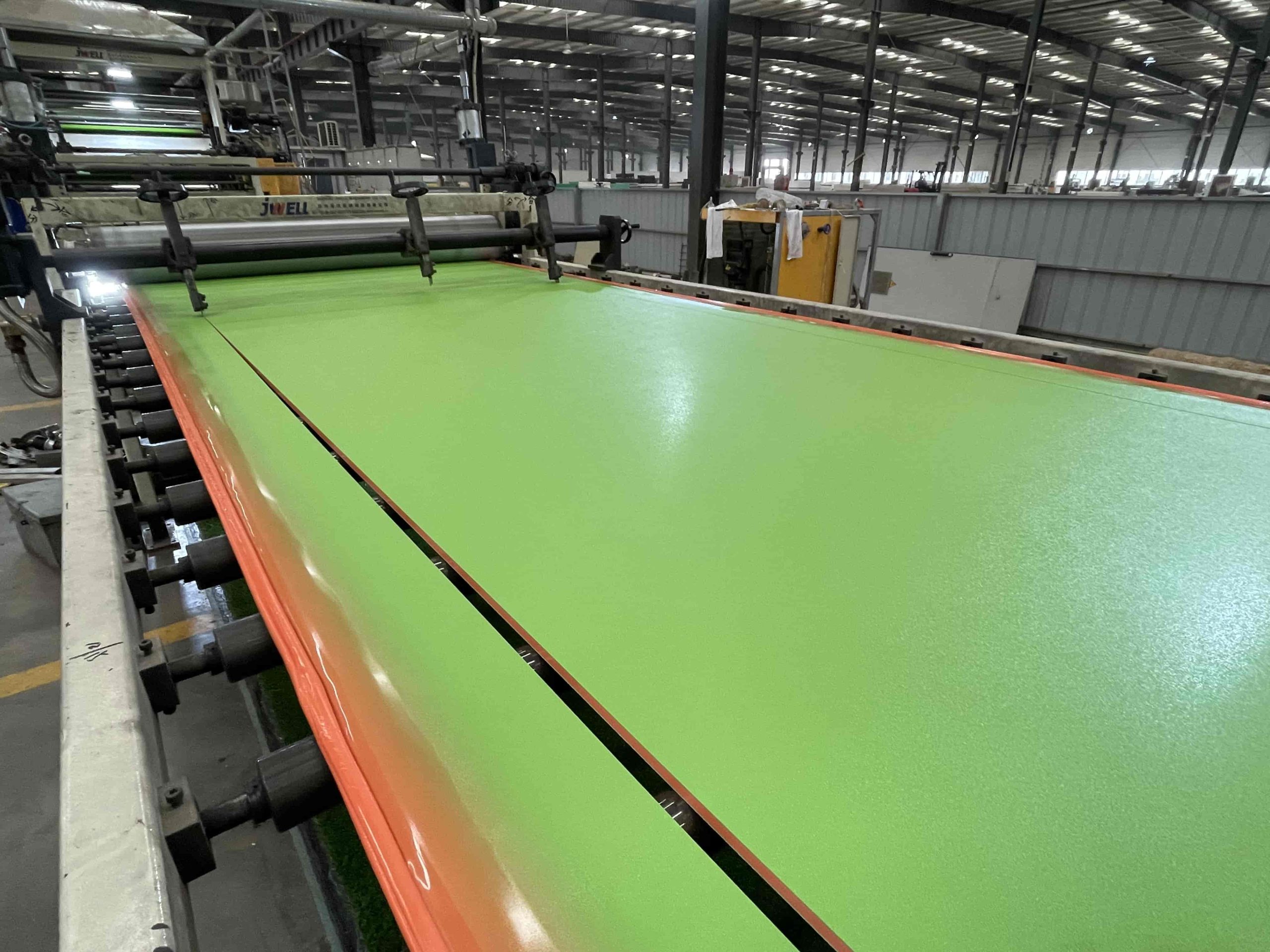
A bright yellow or white top layer stands out clearly. Meanwhile, the dark bottom layer hides the soil and dirt. As a result, crane operators see the designated zones perfectly from above. Safety zones remain visible even in low light conditions. Furthermore, color coding helps separate pedestrian paths from heavy vehicle lanes. Thus, the whole site functions much better and safer.
Deployment Methods for Fast Access
Field workers deploy these heavy duty ground protection mats very fast. You do not need any special training to lay them down. Two people can carry a standard board easily by hand. First, you align the straight edges together over the muddy area. Next, you insert metal connectors into the corner holes. These strong steel links lock the panels tight. Consequently, the mats do not drift apart under heavy stress. Furthermore, a tight seam prevents mud from squeezing through the cracks. You can build a long access road in just one morning. Conversely, pouring temporary gravel takes several days and costs much more. Finally, packing the site up takes just as little time.
Load Ratings and Ground Pressure in Plain Terms
Manufacturers publish load numbers, but soil condition decides the real limit. A mat spreads weight. It does not create bearing capacity out of nothing.
A rough way to think about it: a 3/4-inch HDPE panel under a machine with 100 psi track pressure can bring effective pressure down to roughly 15 to 25 psi, depending on how the load sits and how firm the base is. On saturated peat you may need two overlapping layers. On damp clay a single layer is usually plenty.
Ask your supplier for tensile strength, flexural modulus, and impact data on the actual sheet grade. Numbers matter more than marketing claims. Density should sit around 0.94 to 0.96 g/cm³ for a proper high density polyethylene HDPE sheet.
Quality Checks Before You Buy
Not all hdpe mats are equal. Recycled scrap with heavy filler looks fine on day one and cracks by month six. A few things to check:
- Resin source. Virgin resin, or a controlled blend with documented ratios. Ask for the grade.
- UV package. Carbon black plus UV additive. Panels without it fade and get brittle outdoors.
- Thickness tolerance. A quality run holds within ±5%. Thin spots fail first.
- Edge and corner finish. Rounded edges and radiused corners resist chipping.
- Hand holes. Cut holes should be smooth-bored, not punched, so they do not tear.
- Connection system. Bolt-together links, cam locks, or overlap tabs keep panels from creeping apart.
- Cold impact data. If you work in winter, ask for low-temperature impact figures.
Sheet quality traces straight back to extrusion control. Even melt temperature, steady line speed, and correct cooling produce flat panels with low internal stress. That is why we run our own extrusion lines for high density polyethylene sheets rather than buying finished stock.
What Ground Protection Mats Actually Do
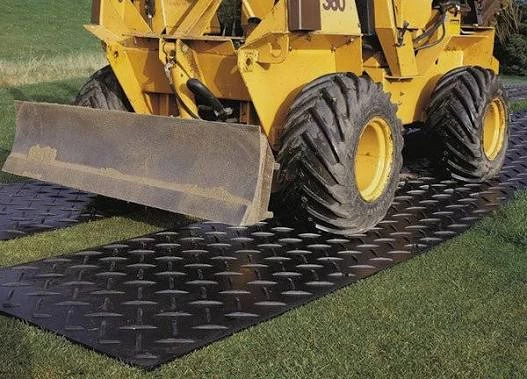
A loaded excavator tire can push more than 100 psi into the dirt beneath it. Soft ground gives way, ruts form, and within an hour a passable route turns into a mud trap. Mats change the math. By placing a stiff panel between tire and soil, the same load spreads across several square feet. Contact pressure drops sharply, often below 10 psi.
That single change delivers several results at once:
- Equipment stays on schedule instead of waiting for a tow.
- Lawns, sports fields, and paved areas avoid permanent damage.
- Site restoration costs shrink at the end of the job.
- Workers walk on a firm, level surface instead of slick mud.
- Utility corridors and pipeline right-of-ways meet landowner agreements.
Temporary access roads, crane pads, and pedestrian walkways all use the same principle. Only the thickness and layout change.
Why HDPE Became the Standard Material
Plywood rots. Timber cribbing is heavy and splinters. Steel plates rust and demand a crane to move. High density polyethylene sits in a sweet spot between strength, weight, and lifespan.
HDPE is a semi-crystalline thermoplastic with a density between 0.94 and 0.96 g/cm³. The polymer chains pack tightly, which gives the material stiffness without brittleness. Tensile strength runs about 23 to 31 MPa. Water absorption stays under 0.01%, so a mat left in standing water for a month weighs the same as the day it arrived.
Cold weather performance matters on winter jobs. HDPE stays usable down to roughly -60°C, and it does not crack under impact the way filled composites sometimes do. On the warm side, service temperature reaches about 80°C, well above anything a mat sees in direct sun.
Chemical resistance is another reason contractors trust it. Diesel spills, hydraulic fluid, concrete washout, road salt, and fertilizer all leave HDPE unaffected. The same trait explains the broad list of high density polyethylene uses across industry, from pipe and geomembrane liners to truck bed liners, chute liners, marine boards, and cutting surfaces.
Panels are made by extruding molten resin through a flat die, then calibrating thickness with polished rolls. The result is a dense, void-free board. When people search for a high density polyethylene HDPE sheet, this is the product family they mean, and mats are simply thicker sheets with a gripping surface added.
Ground Protection Mats 4×8 and Other Common Sizes
The 4×8 ft panel is the workhorse. It matches standard sheet dimensions, fits on a flatbed without waste, and covers 32 square feet per piece. Contractors ordering ground protection mats 4×8 can plan coverage quickly, since 20 mats build roughly 8 feet of road width across 80 feet of length.
Other sizes serve specific needs:
|
Panel size |
Coverage |
Typical use |
|
3 x 6 ft |
18 sq ft |
Foot traffic, small utility vehicles |
|
4 x 8 ft |
32 sq ft |
General access roads, crane outrigger support |
|
4 x 10 ft |
40 sq ft |
Wider haul roads, fewer joints |
|
6 x 12 ft |
72 sq ft |
Heavy rig mats, machine placement |
Thickness drives load capacity more than any other factor:
|
Thickness |
Approx. weight (4×8) |
Suitable for |
|
12 mm (1/2 in) |
34 kg / 75 lb |
Foot traffic, ATVs, light pickups |
|
19 mm (3/4 in) |
53 kg / 117 lb |
Skid steers, service trucks, aerial lifts |
|
25 mm (1 in) |
70 kg / 155 lb |
Mid-size excavators, loaders |
|
38–50 mm |
105–140 kg |
Cranes, drill rigs, heavy haul |
Thicker is not always better. A 50 mm panel needs equipment to move it, which slows crews on jobs where mats shift daily. Many contractors keep two thicknesses on hand and match the panel to the machine.
Frequently Asked Questions
What weight can heavy duty ground protection mats support?
These industrial mats easily support extremely heavy loads. Standard panels hold up to eighty tons of static weight. Therefore, large excavators and fully loaded dump trucks drive over them safely. The high-density plastic core prevents the boards from cracking under pressure.
How do you connect the mats together on site?
Workers use specialized metal links to join the boards. First, you place two mats side by side. Next, you slide a steel connector through the corner holes. As a result, the panels lock together tightly and do not drift apart.
Do these mats damage the grass underneath them?
No, these boards protect the natural grass perfectly. They distribute the massive vehicle weight evenly across a large surface area. Consequently, heavy tires never dig deep ruts into the soil. The grass usually bounces back just a few days after removal.
How long do plastic trackway boards last?
These durable boards last for many years with proper care. The rugged plastic ignores water, mud, and intense sunlight completely. Furthermore, it never rots or splinters like traditional wood. As a result, you can reuse the same inventory across dozens of different projects.
How much does a 4×8 HDPE mat weigh?
A 1/2-inch panel runs about 45 to 50 lb. A 3/4-inch panel is around 70 to 75 lb. One inch lands near 95 lb.
Can they be used on pavement?
Yes. Mats protect finished asphalt and concrete from tracks, outriggers, and dropped tools.
Do they work in freezing weather?
Yes. HDPE keeps its toughness well below freezing, which is why it beats most other plastic sheeting for winter access work.
Can panels be cut to size?
They cut with a circular saw and a fine-tooth blade. Drilling and routing work too, so custom shapes for outrigger pads are simple to make.
For application-specific guidance, see our guides to temporary road mats, ground protection mats 4×8 and HDPE mats.



